Unifying Words and Their Meanings: The Quiet Genius of Montessori Vocabulary Lessons
April 6, 2026

Have you ever watched a Montessori teacher give a lesson and thought, "That seemed...very short!”? If so, you may have witnessed a three-period lesson. What looks almost effortlessly simple is actually one of the most carefully designed teaching techniques.


The three-period lesson is the primary way we introduce new vocabulary to young children. We use it constantly for phonetic sounds, geometric shapes, textures, quantities, names of parts of a flower, names of continents, and so much more. Virtually every time children learn a precise new word for something they're experiencing with their senses, we are using a version of this lesson.


Why Vocabulary Needs Its Own Method


Young children are in what Dr. Montessori called a sensitive period for language. This is a window of time when children’s minds are especially primed to absorb new words and refine their understanding of them. It’s important to keep in mind, though, that absorbing a word isn't the same as truly knowing it. Children might hear the word "rough" many times without ever firmly connecting that sound to what their fingers actually feel on a piece of sandpaper.


The three-period lesson closes the understanding gap. It's built on an insight Dr. Maria Montessori borrowed from educator Édouard Séguin. Learning a word happens in stages: first association, then recognition, then recall. Moving through those stages deliberately, with no extra words or distractions to clutter the lesson, gives children's minds the clearest possible path to making a lasting connection.


“Both object and name should strike the child's understanding at the same time — but only the name itself, and not some other word, should be pronounced.”

— Dr. Maria Montessori, The Discovery of the Child


The Simplicity of the Three Stages


Here's how the three-period lesson unfolds. We’ll use a classic example of teaching the words "rough" and "smooth" with our sensorial textured boards.


1. ASSOCIATION — "This is..."


The adult presents the object and names it clearly, with no extra words. The child repeats the word while experiencing the sensation. "This is rough." The child runs their fingers across the surface and repeats: "Rough."


2. RECOGNITION — "Show me..."


After a brief pause, the adult asks the child to identify the object by name. The child simply points or touches, and thus no verbal answer is needed. "Which is smooth? Which is rough?" The child points to each in turn.


3. RECALL — "What is this?"


The adult points to an object, and the child produces the name themselves, demonstrating that the word is now truly theirs. "What is this?" The child touches the surface and answers: "Rough."


The whole lesson might take only two or three minutes, and this brevity is part of what makes it work. A child's attention is fully focused on precise vocabulary acquisition.


What Happens When a Child Gets It Wrong


One of the most quietly radical aspects of the three-period lesson is what happens when a child gets it wrong. If a child points to the wrong texture in the second stage, the adult doesn't correct. We don’t say, "no, try again.” Instead, we just end the activity gently, with the understanding that we will try the lesson again another day.


Dr. Montessori was clear about this approach. A correction at that moment doesn't help a child learn the word. In fact, a correction only reinforces the feeling of having failed. So we simply close the lesson. The child carries no impression of having gotten something wrong, and when we revisit the lesson, the child comes to it fresh.


As Dr. Montessori wrote, an error in the second period is simply a sign that the child "was not at that instant ready for the psychic association.” Nothing is wrong with the child. The teaching hasn’t failed. It just wasn’t the right moment.


After the Lesson: When Words Come Alive


One of the loveliest things to observe after a successful three-period lesson is what children do next. A child who has just learned the words "rough" and "smooth" will often wander the classroom touching things: the edge of a wooden shelf, a piece of fabric, the surface of a stone, and quietly naming the texture to themselves. The words become tools for understanding the world, and they want to use them everywhere.


This spontaneous generalization is exactly what the lesson is designed to spark. The goal is never for children to recite vocabulary on command. Rather, we want to give them language that deepens and sharpens their experience of everything around them.


Trying It at Home


You don't need Montessori materials to use this approach. Any time you want to help a young child connect a precise word to something they're experiencing (the names of spices by smell, the names of fabrics by touch, the names of tools in the garden), the same three-step structure applies. Name it clearly. Ask them to show you. Ask them to tell you. Keep it brief, keep it joyful, and if they get stuck, simply set it aside and try again tomorrow.


The lesson works because it respects how young minds learn. New connections need space, simplicity, and the freedom to form without pressure. 


To see this vocabulary tool in action, schedule a visit here in Bozeman, MT.
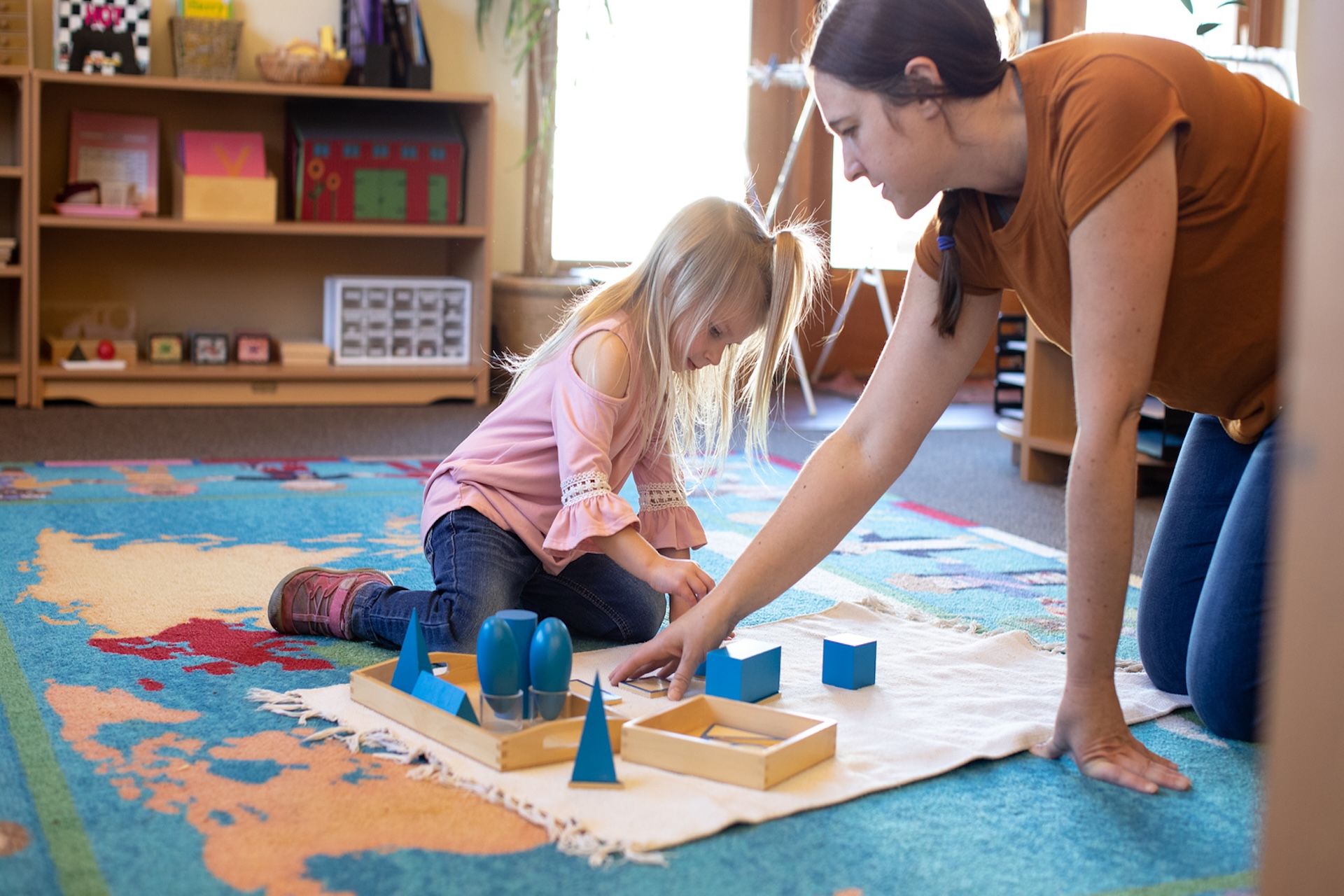
Teacher helping children at a table with a board game in a classroom
July 30, 2026
Come see the Montessori environment in action! Now enrolling for the 2026-2027 school year.
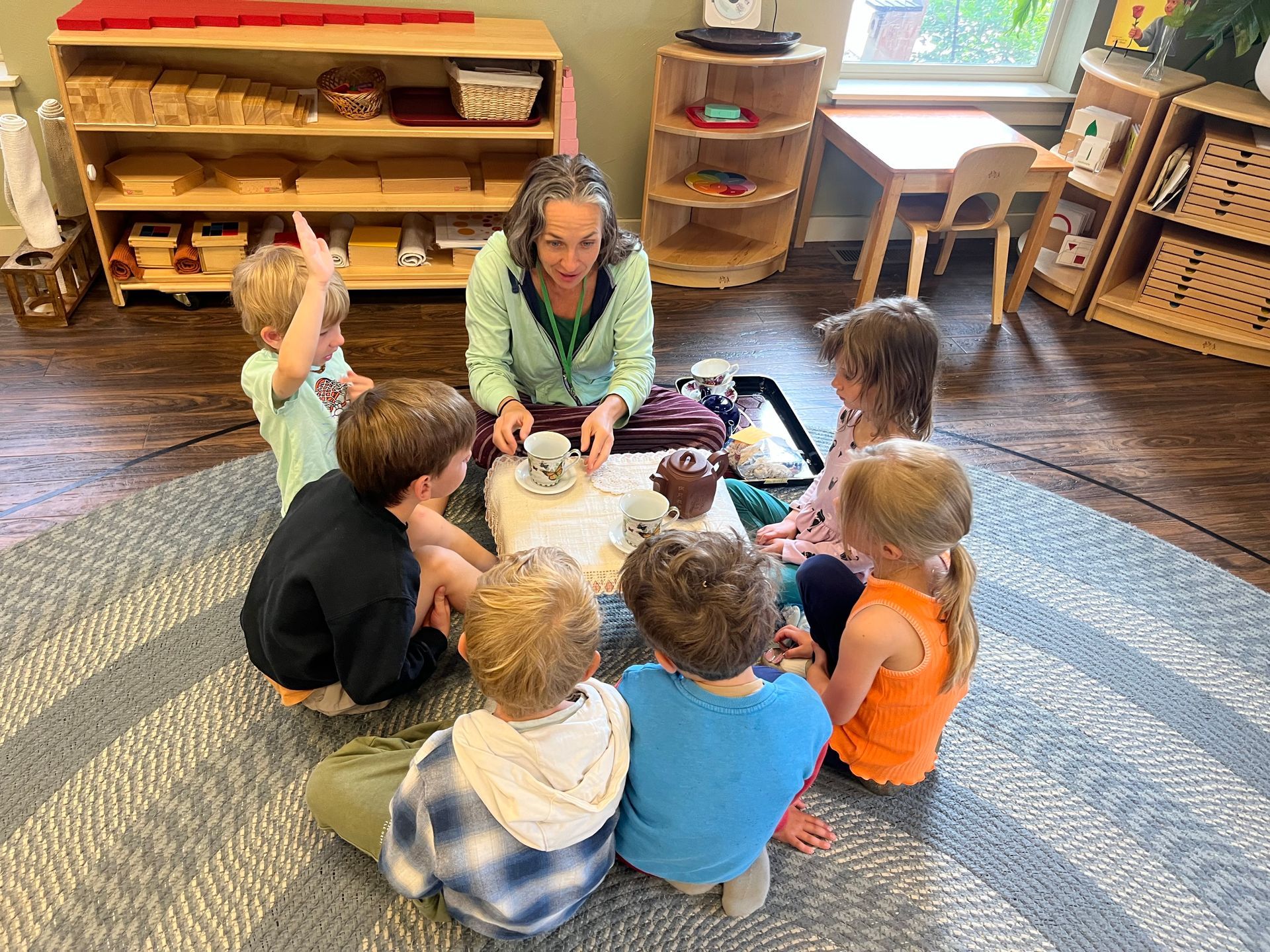
montessori children with guide in tea lesson
June 26, 2026
We’re opening our doors for a special campus tour and we'd love for you to join us!
Three young children sitting on a couch, smiling in a bright indoor room.
June 15, 2026
Connect the Montessori classroom to nature. Discover how exploring Montana’s rivers helps young children develop spatial awareness and environmental respect.
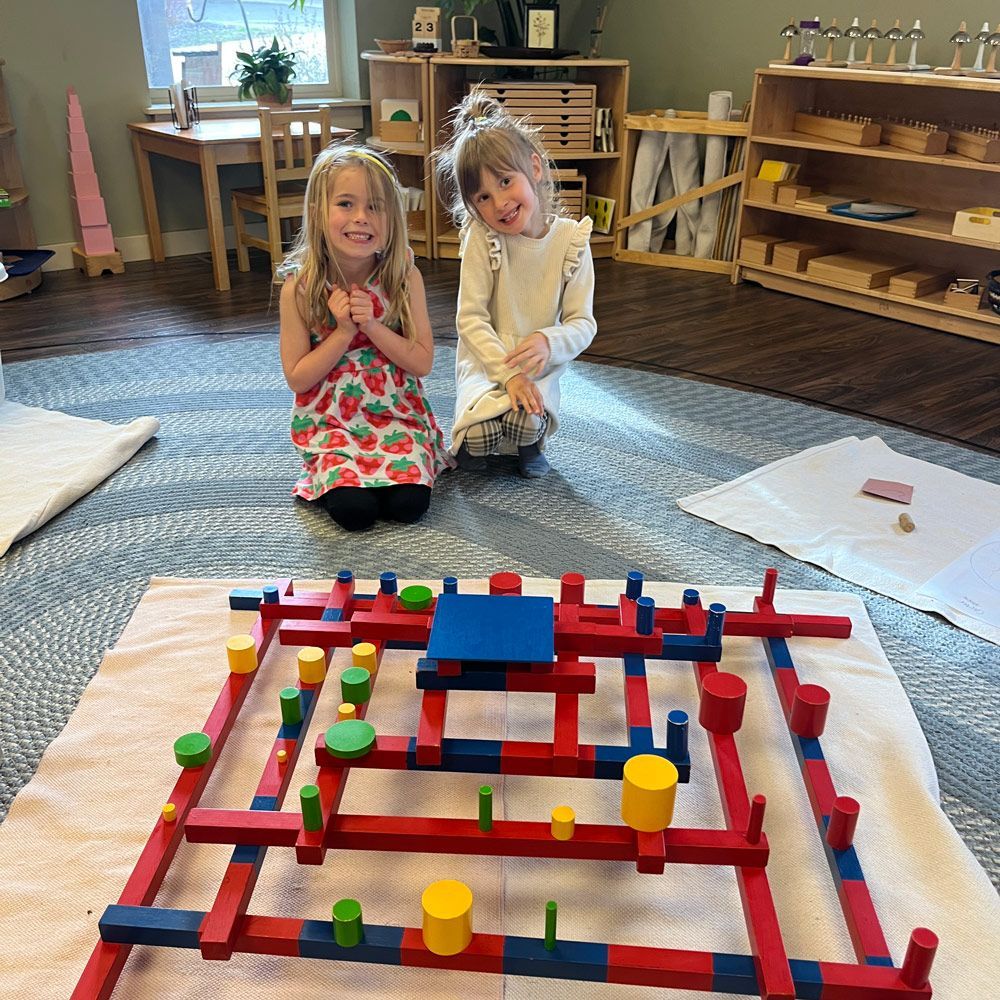
Two children kneel on a classroom rug behind a colorful block maze on the floor.
June 1, 2026
In the Montessori tradition, we talk a lot about "following the child." Sometimes people mistake this for letting a child do whatever they want. But as those of us who have been in the trenches know, following the child actually means observing them through developmental periods so thoughtfully that we understand what they need before they even have the words for it. When it comes to mental health, this observation is our greatest tool, as it helps us prepare. Mental health in childhood includes resilience, the security of belonging, and the development of an "inner voice" that tells a child they are capable, eventually serving as their source of internal guidance. Supporting this development requires us adults to shift from being managers of their behavior to loving guardians of their emotional environment. The Foundation: Safety and Routine For children in the first plane of development (birth to age 6), the groundwork for mental health is laid through warm, secure relationships. In Montessori terms, this is the "prepared environment” of connection. We often say that children need consistency like they need air. We provide stability through routine—not a rigid schedule, but a predictable rhythm. When a child knows what comes next, their nervous system relaxes. Simple acts like involving them in everyday moments—letting them slice a banana or fold washcloths—give them a sense of agency. A child who contributes to the world around them is a child who feels capable and valued. This sense of "I can do it" is important, and sometimes we just have to get out of the way. The Elementary Years: The Why and the Who As children move into the second plane of development (ages 6–12), their mental health needs shift toward social belonging and moral understanding. This is the age of "Why?" and "That’s not fair!" At this stage, adults can check in on their feelings through everyday events. Did they get into a fight with their friend? Don’t rush to fix the sadness. Instead, sit with them in it. We can support their mental health by giving them the tools to solve their own social problems. Ask, "What do you think would help you feel better?" rather than handing them the solution. This builds the self-efficacy that helps buffer against anxiety and depression later in life. Learning the Hard Way Mental health isn't about avoiding the scary or hard things that come with growing up; it's about making sure your child never has to face them alone. It’s about cuddles, and hugs, and playing with your kids. It’s about recognizing that a tantrum isn't an attack on your parenting—it’s a child whose inner "prepared environment" has temporarily collapsed, and they need you to help them rebuild it. The Parent’s Work (The Inner Preparation) In Montessori, the "prepared adult" must do their own inner work to best be able to guide a child. Parenting can feel messy, and it rarely looks like the peaceful, perfectly-balanced life we might have imagined. Here is how to keep your own foundation solid: Honoring the "Gap": Make peace with the fact that your reality may not match your expectations. There will be days when you are not the “calm, cool and collected“ model you want to be. Forgive yourself. Your children don’t need a perfect parent; they need a regulated one who can apologize when they mess up and move forward. Mindful Co-Parenting: Whether you live in the same house or two, communication between co-parents must be clear and boundary-honoring. Children are emotional barometers; they feel the pressure of unspoken conflict. Aim for "functional transparency"—share the necessary information about the child’s needs without using the child as a messenger. Self-Care is Not a Luxury: You cannot pour from an empty vessel. In the Montessori classroom, a tired, burnt-out adult is not the example we want to set, nor is it an effective one. Taking ten minutes for a quiet tea or a solo walk isn't "ignoring" your kids; it’s calibrating your instrument so you can be the calm center they need. Boundaries as Love: Setting a boundary for yourself ("I need 5 minutes of quiet before I can help with that") teaches your child that you are a human with needs. This honors your humanity and models for them how to protect their own mental health in the future.
Children sit in a circle around a teacher at a table, sharing a small activity in a classroom.
May 18, 2026
Overbooking your child's summer? Learn why unstructured downtime and embracing a little boredom are vital for nurturing your child's creativity.
Montessori child working in the classroom
May 18, 2026
We’re opening our doors for a special campus tour and we'd love for you to join us! 
May 4, 2026
Discover how Montessori education champions character development, physical autonomy, and personal best over the cultural pressure of competition.
A child with hair in small buns sits at a wooden table, painting on a sheet of paper with a small brush.
April 27, 2026
Discover how peer learning, meaningful context, adult interaction, and order align Montessori with the science of how children learn best.
Two children hang pieces of fabric on a wooden drying rack inside a classroom.
April 20, 2026
Does Montessori work? Explore the research behind movement, choice, interest, and intrinsic motivation in Montessori: The Science Behind the Genius.
Show More