Famous Montessori Alumni: Preparing Humans to Make a Difference
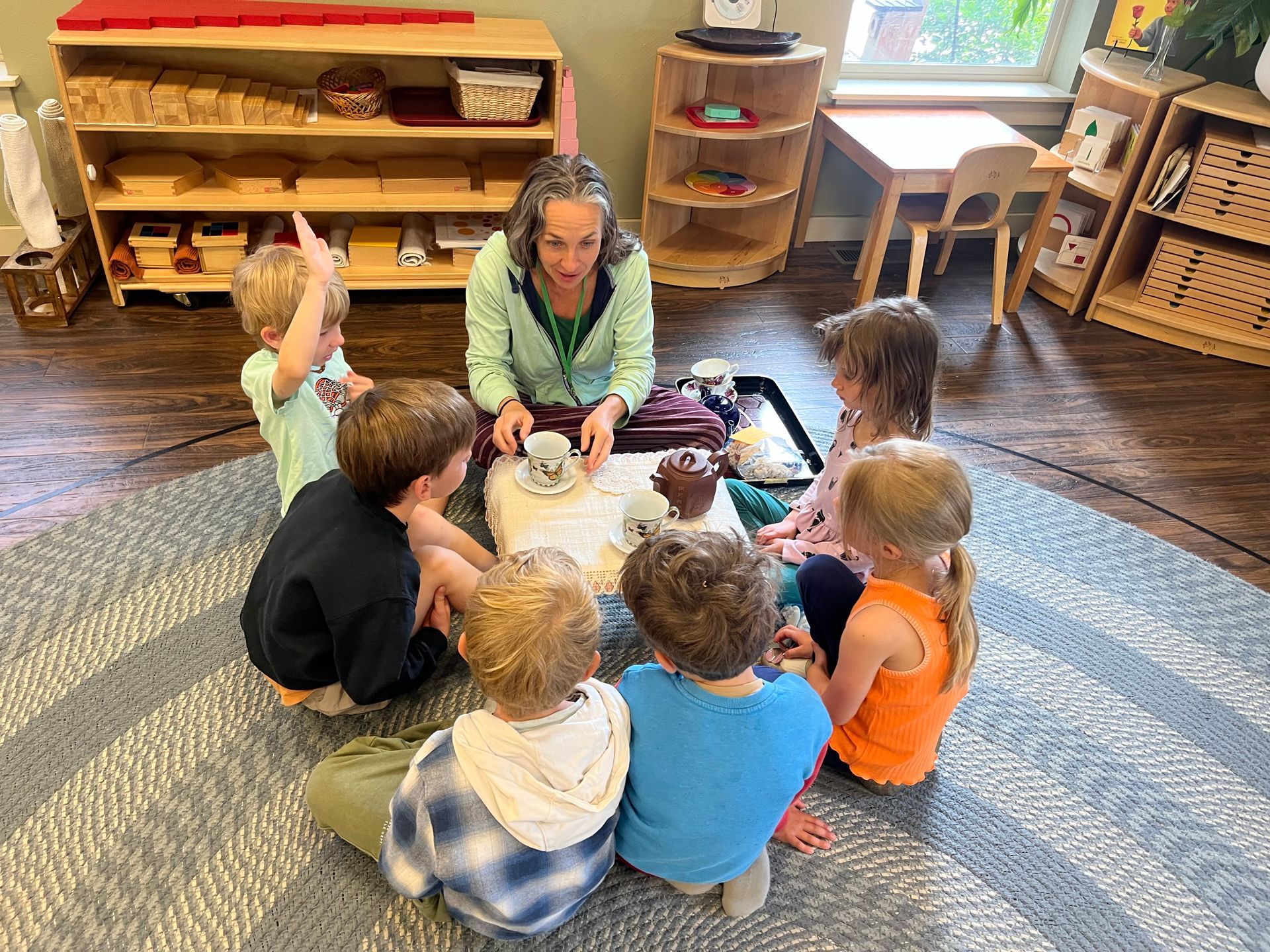
For more than a century, the work of Dr. Maria Montessori has affected the lives of countless children and families, but the ripples of her ideas and educational methods have reached far beyond the walls of individual classrooms. Her work, and the dedication of the many Montessori Guides who put her method into practice, has served as a foundational launchpad for individuals who have gone on to shape modern history, science, culture, and technology.
Here are just a few remarkable stories that show how a high-fidelity Montessori education prepares a human being to innovate, lead, and make a meaningful difference in our world.
1. How Montessori Shaped Literature and Universal Storytelling
Montessori education has a unique way of introducing children to the universe. At a time when young minds are naturally seeking big answers, Maria Montessori's concept of Cosmic Education introduces foundational scientific and historical truths in a way that inspires a lifelong sense of awe and wonder.
This deep understanding of the interconnectedness of our world often lasts a lifetime, giving rise to extraordinary storytellers. Two renowned Montessori alumni illustrate this powerful connection: Gabriel García Márquez and Anthony Doerr.
Gabriel García Márquez
Awarded the Neustadt International Prize for Literature in 1972 and the Nobel Prize in Literature in 1982, García Márquez wrote world-renowned titles such as One Hundred Years of Solitude and Love in the Time of Cholera. Celebrated globally as one of the most influential writers of the 20th century, his work reflected a deep sensitivity to human nature, social justice, and the beauties of the world.
García Márquez directly attributed his creative foundation to his early schooling, stating:
"I do not believe there is a method better than Montessori for making children sensitive to the beauties of the world and awakening their curiosity regarding the secrets of life."
Anthony Doerr
Author of the 2014 Pulitzer Prize-winning novel All the Light We Cannot See, Anthony Doerr often reflects on attending a Montessori school where his mother was a Guide. He credits early Montessori lessons with shaping his perspective on the world and his work as a writer:
"She was always teaching us all kinds of things. I remember very clearly geologic time being one of the big lessons she taught us. She even had us take toilet paper rolls and unroll them and had us map out the various eras, like Cambrian, and figure out where humans would fit on this toilet paper timeline of the Earth... You realize, of course, that human life goes in the last square... I remember those lessons make you feel small. Then they make you feel—what an amazing thing we get to be on this Earth... So I think that's part of everything I work on."
2. How Montessori Revolutionized Home Cooking
Before becoming an internationally acclaimed culinary icon, Julia Child began her career in copywriting and served as a secret intelligence research assistant in Washington, D.C. during World War II, helping develop shark repellents to protect underwater explosives. She later turned her sharp mind to the culinary arts, discovering a passion that transformed how everyday people approach cooking.
Child was a proud Montessori alumnus who frequently credited her early Montessori experience with developing her love for working with her hands. Through her landmark cookbooks and television shows, she demystified complex French cuisine, making it accessible to American home kitchens.
Perhaps her most endearing Montessori trait was her attitude toward mistakes during live filming. Rather than viewing errors as failures, Child embraced them calmly as a normal, informative part of the learning process, an exact mirror of how children in a Montessori prepared environment learn self-correction without shame or fear.
3. How Montessori Drives Public Service & Social Action
The self-direction, social consciousness, and practical life skills fostered in Montessori classrooms often cultivate leaders dedicated to civic stewardship and equity.
"I'm a Montessori lifer, Pre-K and all the way through. I attribute everything I've accomplished to Montessori."
This statement comes from a Maryland State Senator who directly credits his early Montessori grounding as the primary driver behind his legislative career. His public service record includes introducing landmark legislation to eliminate discriminatory housing practices, prohibit the suspension and expulsion of children in early childhood grades (Pre-K through 2nd grade), and protect individuals from discrimination based on culturally significant hairstyles.
4. How Montessori Inspired World-Building and Interactive Entertainment
When children work with Montessori concrete materials—like the binomial cube or math beads—they are not simply memorizing formulas; they are internalizing abstract principles through self-directed manipulation.
Will Wright, the visionary creator of The Sims and SimCity, is widely regarded as one of the most influential game designers in history. He attributes his entire philosophy of open-ended world-building directly to his Montessori childhood:
"Montessori taught me the joy of discovery. It showed you can become interested in pretty complex theories, like Pythagorean theory, say, by playing with blocks. It’s all about learning on your terms, rather than a teacher explaining stuff to you. SimCity comes right out of Montessori—if you give people this model for building cities, they will abstract from it principles of urban design."
5. How Montessori Transformed Modern Search and Global Information
In 1998, Sergey Brin and Larry Page co-founded Google in a garage. What began as an innovative search engine fundamentally altered how humanity accesses, organizes, and shares knowledge globally.
Both founders attended Montessori schools during their early formative years and have repeatedly cited their Montessori background as a critical factor in their success and willingness to think independently:
"I do think that some of the credit for the willingness to go on your own interests, you can tie that back to Montessori education." — Sergey Brin
By encouraging children to follow their intrinsic curiosity, ask big questions, and take ownership of their learning, Montessori environments foster the exact problem-solving mindset and agency required to build transformative technology.
Looking Ahead
When young children are given a prepared environment that honors their innate drive for independence, deep concentration, and grace, there is no limit to what they can achieve.
Seeing how these influential historical and modern figures credit their early childhood experiences raises an inspiring question: Where will the next generation of Montessori alumni take us?
Curious to see how authentic, high-fidelity Montessori education builds independent thinkers and creative problem-solvers in real time?
Schedule a tour
to see our classrooms and community.