The Power of a Mirror and a Tissue

August 25, 2025

In their journey toward independence, one of the earliest and most meaningful steps children take is learning to care for themselves. In Montessori, this essential area of development is part of what we call Practical Life, which supports both physical and psychological growth.


A Prepared Environment for Self-Care


Montessori environments are intentionally designed to foster this growth. Everything is made accessible at the child's level: a sink they can reach, a faucet they can operate, and soap measured just right for a small hand. We carefully choose and arrange the materials to promote independence, order, and confidence.


We ensure that activities that may have once been done to children—like washing hands, brushing hair, or putting on a coat—can now be done by children, with increasing skill and pride. These seemingly simple tasks carry profound developmental weight, reinforcing our children’s self-concept and strengthening their ability to function with increasing autonomy.


Learning to Care for the Self: Wiping the Nose


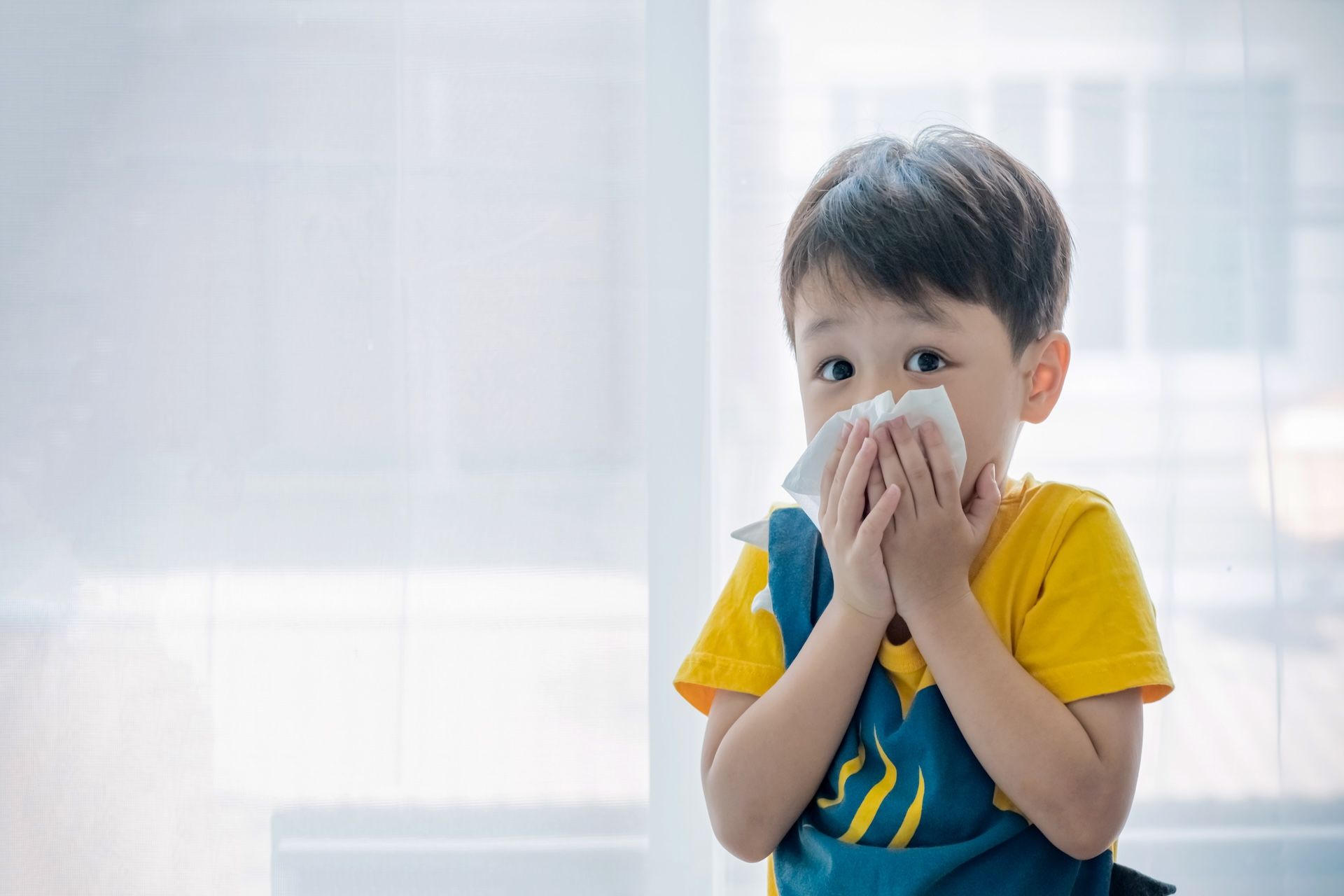
In the Montessori approach, even the simplest daily tasks are viewed as meaningful opportunities for children to build independence and confidence. One such task—often overlooked by adults but deeply empowering for children—is learning how to wipe their own nose.


This Practical Life activity is typically introduced around age one, or when a child enters a Montessori classroom. It is designed not only to support hygiene but also to encourage autonomy, intentional movement, and body care.


This activity can also be introduced at home!


A Prepared Environment for Self-Care


To support this important developmental step, first think about how to carefully prepare the environment:


  • Set up a small basket or container that holds about 10 tissues, each folded in half. (During cold season, full-size tissues may be used for greater effectiveness.)
  • Place a small trash can nearby for easy disposal.
  • Have a mirror, either mounted or resting at the child’s height, to allow your child to observe their own face and movements.
  • Store extra tissues nearby, either on a grooming table or supply shelf, to support repetition and independence.


This setup encourages children to move freely and participate fully in the process, fostering both confidence and coordination.


Step-by-Step: The Wiping Process


Next, we can model and provide gentle guidance:


  • Invite your child to come to the mirror.
  • Help them notice something on their nose and explain the purpose of the activity.
  • Show the tissues and select one, unfolding it slowly and deliberately.
  • Invite your child to select and open a tissue.
  • Face the mirror and demonstrate how to place the tissue so each half forms a “tent” over the nose.
  • Gently bring the tissue edges together and wipe upward and outward.
  • Fold the tissue in half, then rotate it and repeat with the other side.
  • Use the remaining clean section to dab gently under the nose.
  • Dispose of the tissue in the trash.
  • Invite your child to have a turn and, if needed, show the mucus on the tissue as a reference.
  • Encourage repetition with a new tissue if their nose is not yet clean.
  • Remind your child that they may wipe their nose anytime.
  • Follow up with handwashing to reinforce cleanliness.


If your child has excessive mucus or needs a more thorough cleaning, you can also use pre-moistened wipes. We typically don’t introduce nose blowing until around age 2.5 to 3 to avoid the risk of ear infections.


When introducing this activity, it is helpful to consider its overarching purposes. First and foremost, learning how to wipe one’s own nose helps support independence and confidence. The process also helps children develop self-awareness and tools for self-care. 


We can also highlight certain movements so our children achieve success. In Montessori, we call these “points of interest.” The key points of interest in this activity are:


  • Watching their own movements in the mirror
  • Observing the removal of mucus from their face
  • The folding and unfolding of the tissue
  • Practicing care not to touch the mouth during wiping


A Foundation for Independence & Self-Awareness


In Montessori, every Practical Life activity serves a deeper purpose. Even wiping the nose becomes a pathway to self-discovery, dignity, and joyful independence. By breaking down the steps and offering repeated, respectful invitations to participate, we give children the tools they need to become gracefully self-aware and independent!


Care of oneself is about far more than hygiene or appearance. These early experiences shape children’s understanding of their place in the world and prepare them to become responsible, confident, and independent human beings.


In Montessori, self-care is not a chore. Rather, it’s a celebration of children’s unfolding independence. Come visit our school to learn more about activities that cultivate children’s capability and self-respect. 


montessori children with guide in tea lesson
June 26, 2026
We’re opening our doors for a special campus tour and we'd love for you to join us!
Three young children sitting on a couch, smiling in a bright indoor room.
June 15, 2026
Connect the Montessori classroom to nature. Discover how exploring Montana’s rivers helps young children develop spatial awareness and environmental respect.
Two children kneel on a classroom rug behind a colorful block maze on the floor.
June 1, 2026
In the Montessori tradition, we talk a lot about "following the child." Sometimes people mistake this for letting a child do whatever they want. But as those of us who have been in the trenches know, following the child actually means observing them through developmental periods so thoughtfully that we understand what they need before they even have the words for it. When it comes to mental health, this observation is our greatest tool, as it helps us prepare. Mental health in childhood includes resilience, the security of belonging, and the development of an "inner voice" that tells a child they are capable, eventually serving as their source of internal guidance. Supporting this development requires us adults to shift from being managers of their behavior to loving guardians of their emotional environment. The Foundation: Safety and Routine For children in the first plane of development (birth to age 6), the groundwork for mental health is laid through warm, secure relationships. In Montessori terms, this is the "prepared environment” of connection. We often say that children need consistency like they need air. We provide stability through routine—not a rigid schedule, but a predictable rhythm. When a child knows what comes next, their nervous system relaxes. Simple acts like involving them in everyday moments—letting them slice a banana or fold washcloths—give them a sense of agency. A child who contributes to the world around them is a child who feels capable and valued. This sense of "I can do it" is important, and sometimes we just have to get out of the way. The Elementary Years: The Why and the Who As children move into the second plane of development (ages 6–12), their mental health needs shift toward social belonging and moral understanding. This is the age of "Why?" and "That’s not fair!" At this stage, adults can check in on their feelings through everyday events. Did they get into a fight with their friend? Don’t rush to fix the sadness. Instead, sit with them in it. We can support their mental health by giving them the tools to solve their own social problems. Ask, "What do you think would help you feel better?" rather than handing them the solution. This builds the self-efficacy that helps buffer against anxiety and depression later in life. Learning the Hard Way Mental health isn't about avoiding the scary or hard things that come with growing up; it's about making sure your child never has to face them alone. It’s about cuddles, and hugs, and playing with your kids. It’s about recognizing that a tantrum isn't an attack on your parenting—it’s a child whose inner "prepared environment" has temporarily collapsed, and they need you to help them rebuild it. The Parent’s Work (The Inner Preparation) In Montessori, the "prepared adult" must do their own inner work to best be able to guide a child. Parenting can feel messy, and it rarely looks like the peaceful, perfectly-balanced life we might have imagined. Here is how to keep your own foundation solid: Honoring the "Gap": Make peace with the fact that your reality may not match your expectations. There will be days when you are not the “calm, cool and collected“ model you want to be. Forgive yourself. Your children don’t need a perfect parent; they need a regulated one who can apologize when they mess up and move forward. Mindful Co-Parenting: Whether you live in the same house or two, communication between co-parents must be clear and boundary-honoring. Children are emotional barometers; they feel the pressure of unspoken conflict. Aim for "functional transparency"—share the necessary information about the child’s needs without using the child as a messenger. Self-Care is Not a Luxury: You cannot pour from an empty vessel. In the Montessori classroom, a tired, burnt-out adult is not the example we want to set, nor is it an effective one. Taking ten minutes for a quiet tea or a solo walk isn't "ignoring" your kids; it’s calibrating your instrument so you can be the calm center they need. Boundaries as Love: Setting a boundary for yourself ("I need 5 minutes of quiet before I can help with that") teaches your child that you are a human with needs. This honors your humanity and models for them how to protect their own mental health in the future.
Children sit in a circle around a teacher at a table, sharing a small activity in a classroom.
May 18, 2026
Overbooking your child's summer? Learn why unstructured downtime and embracing a little boredom are vital for nurturing your child's creativity.
Montessori child working in the classroom
May 18, 2026
We’re opening our doors for a special campus tour and we'd love for you to join us! 
May 4, 2026
Discover how Montessori education champions character development, physical autonomy, and personal best over the cultural pressure of competition.
A child with hair in small buns sits at a wooden table, painting on a sheet of paper with a small brush.
April 27, 2026
Discover how peer learning, meaningful context, adult interaction, and order align Montessori with the science of how children learn best.
Two children hang pieces of fabric on a wooden drying rack inside a classroom.
April 20, 2026
Does Montessori work? Explore the research behind movement, choice, interest, and intrinsic motivation in Montessori: The Science Behind the Genius.
April 16, 2026
Saturday, April 25th, 9:00 am - Noon Bozeman Montessori South Campus: 233 Enterprise Blvd, Bozeman, MT 59718 Bozeman Montessori North Campus: 3774 Equestrian Lane, Bozeman, MT 59718
An adult in a green trench coat holds hands with a child wearing a pink jacket, walking together in an outdoor area.
April 13, 2026
When we lose our cool, repair matters most. Explore accountability, curiosity, and connection to break reactive cycles and parent with intention.
Show More