More Than a Method: Honoring the Legacy of Dr. Maria Montessori
September 1, 2025

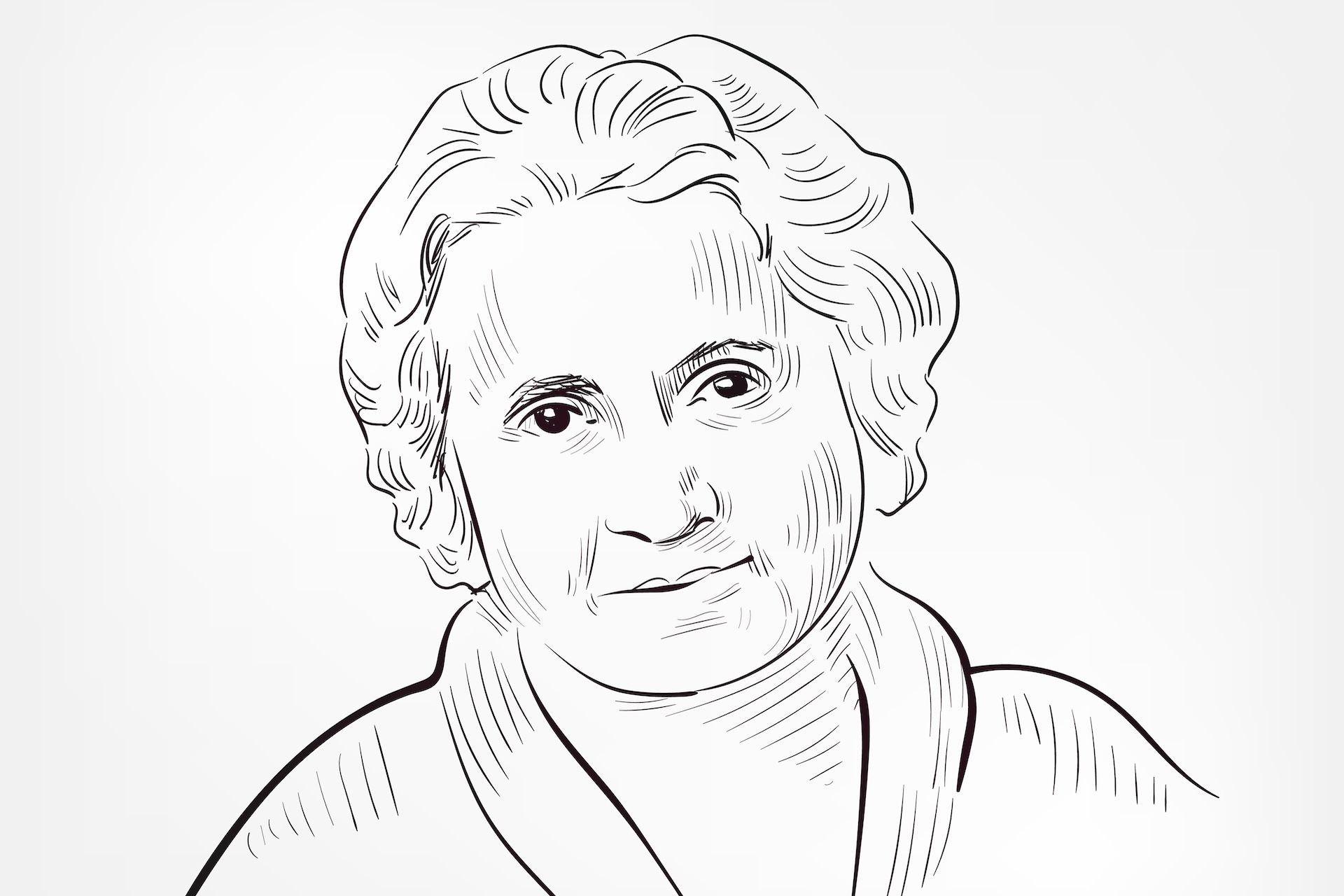
August 31 marked the birthday of Dr. Maria Montessori. Thus, we want to take time to honor the roots of this movement, the visionary contributions of Dr. Montessori herself, and our shared responsibility to carry her legacy forward.


At the heart of Montessori education is a deep respect for human potential. Unlike traditional models that begin with the adult's idea of what a child should learn, the Montessori approach emerged from deep observation and genuine curiosity. Dr. Montessori did not set out to create a new educational system. Rather, she observed children with scientific curiosity and developed an approach in response to their needs.


It’s important to remember that Dr. Montessori was first and foremost a scientist. She was one of the first female physicians in Italy, graduating in 1896 with a specialization in pediatrics and psychiatry. In her medical practice, she encountered children who were often seen as uneducable. However, rather than accept this assumption, Dr. Montessori looked closer.


A Discovery That Changed Everything


In 1900, Dr. Montessori was appointed director of a university program for children with developmental delays. Observing their sensory-seeking behaviors in bleak institutional settings, she began studying how sensory experiences affect cognitive development. She designed hands-on materials and engaged the children in purposeful activity. The results were stunning: children who had been dismissed by society not only improved, but some went on to pass the same standardized exams given to their peers in traditional schools.


Dr. Montessori’s response was not one of self-congratulation. Instead, she challenged the broader education system, asking: If children with significant delays could thrive when given the right environment and tools, why weren’t typically developing children doing better in school?


This question launched a lifetime of work dedicated to understanding and supporting the natural development of all children.


The Birth of the Montessori Method


In 1907, Dr. Montessori opened her first classroom, the Casa dei Bambini, in the working-class neighborhood of San Lorenzo in Rome. Tasked with overseeing daycare for children too young for public school, she began by introducing simple, practical activities, starting with self-care and environmental care. She also provided an array of materials designed to engage children’s hands and minds.


The transformation was extraordinary. Children who had previously been described as wild and unruly became calm, focused, and joyful. They took pride in their appearance and their surroundings. They concentrated for long stretches of time, developed social awareness, and, unprompted, began asking to learn how to read and write.


Dr. Montessori was fascinated by what she called “spontaneous discipline” and the deep love of work she observed in the children. Through observation and experimentation, she continued to refine the materials, the environment, and the adult's role.


Education Rooted in Development


What emerged was a revolutionary approach: an educational philosophy based on the science of human development. Rather than seeing the adult as the source of knowledge and the child as an empty vessel, Dr. Montessori recognized that children come into the world with innate potential and a deep drive to learn.


Montessori education supports this natural unfolding by honoring what Dr. Montessori called human tendencies, such as exploration, orientation, order, communication, work, and repetition, through carefully prepared environments that meet the specific needs of each developmental stage. The adult's role is not to instruct, but to guide, observe, prepare, and support.


This vision of human development extends beyond the individual to a larger understanding of humans as part of a cosmic web of interrelationships. In this interconnected world, every part plays a role in maintaining balance and harmony. Humans have a unique place in this system, and our role requires conscious awareness, humility, and stewardship.


In addition to fostering rich academic growth, Montessori education cultivates mature, adaptive, and compassionate individuals who are capable of making meaningful contributions to our interconnected world.


The Enduring Impact of Montessori’s Vision


Dr. Montessori eventually left her medical practice and professorship to fully devote her life to this work. She lectured around the world, trained teachers, wrote extensively, and advocated for children’s rights. She also always insisted that the focus remain on the children, not on her.


Through decades of scientific observation, experimentation, and cross-cultural study, Dr. Montessori discovered that children, when provided with the right conditions at the right time, flourish. Her insights have stood the test of time. Today, there are approximately 15,000 Montessori schools worldwide, with over 3,000 located in the United States alone. 


For over a century, Montessori education has empowered children to reach their full potential—academically, socially, and emotionally. Yet Montessori is not just about individual success. It’s about building a better society.


We know that children are not just preparing for the future. They are the future. By focusing on children’s holistic development, we are supporting a generation of individuals who are more connected to themselves, to one another, and to the planet.


Carrying the Legacy Forward


Dr. Montessori’s vision asks us to do more than remember her birthday. We need to believe in children, observe them closely, and prepare environments that honor their needs. This also means that we, as adults, approach our role with humility and a sense of curiosity. Our job is to accompany children as they create the future. 


In this way, Montessori education becomes not just a method, but a movement, one rooted in peace, interdependence, and the full development of the human being.


Thank you for being part of this vision. Together, here in Bozeman, MT, we are carrying the Montessori legacy forward, not only by what we teach, but by how we believe in the children before us. Come visit to learn more!

montessori children with guide in tea lesson
June 26, 2026
We’re opening our doors for a special campus tour and we'd love for you to join us!
Three young children sitting on a couch, smiling in a bright indoor room.
June 15, 2026
Connect the Montessori classroom to nature. Discover how exploring Montana’s rivers helps young children develop spatial awareness and environmental respect.
Two children kneel on a classroom rug behind a colorful block maze on the floor.
June 1, 2026
In the Montessori tradition, we talk a lot about "following the child." Sometimes people mistake this for letting a child do whatever they want. But as those of us who have been in the trenches know, following the child actually means observing them through developmental periods so thoughtfully that we understand what they need before they even have the words for it. When it comes to mental health, this observation is our greatest tool, as it helps us prepare. Mental health in childhood includes resilience, the security of belonging, and the development of an "inner voice" that tells a child they are capable, eventually serving as their source of internal guidance. Supporting this development requires us adults to shift from being managers of their behavior to loving guardians of their emotional environment. The Foundation: Safety and Routine For children in the first plane of development (birth to age 6), the groundwork for mental health is laid through warm, secure relationships. In Montessori terms, this is the "prepared environment” of connection. We often say that children need consistency like they need air. We provide stability through routine—not a rigid schedule, but a predictable rhythm. When a child knows what comes next, their nervous system relaxes. Simple acts like involving them in everyday moments—letting them slice a banana or fold washcloths—give them a sense of agency. A child who contributes to the world around them is a child who feels capable and valued. This sense of "I can do it" is important, and sometimes we just have to get out of the way. The Elementary Years: The Why and the Who As children move into the second plane of development (ages 6–12), their mental health needs shift toward social belonging and moral understanding. This is the age of "Why?" and "That’s not fair!" At this stage, adults can check in on their feelings through everyday events. Did they get into a fight with their friend? Don’t rush to fix the sadness. Instead, sit with them in it. We can support their mental health by giving them the tools to solve their own social problems. Ask, "What do you think would help you feel better?" rather than handing them the solution. This builds the self-efficacy that helps buffer against anxiety and depression later in life. Learning the Hard Way Mental health isn't about avoiding the scary or hard things that come with growing up; it's about making sure your child never has to face them alone. It’s about cuddles, and hugs, and playing with your kids. It’s about recognizing that a tantrum isn't an attack on your parenting—it’s a child whose inner "prepared environment" has temporarily collapsed, and they need you to help them rebuild it. The Parent’s Work (The Inner Preparation) In Montessori, the "prepared adult" must do their own inner work to best be able to guide a child. Parenting can feel messy, and it rarely looks like the peaceful, perfectly-balanced life we might have imagined. Here is how to keep your own foundation solid: Honoring the "Gap": Make peace with the fact that your reality may not match your expectations. There will be days when you are not the “calm, cool and collected“ model you want to be. Forgive yourself. Your children don’t need a perfect parent; they need a regulated one who can apologize when they mess up and move forward. Mindful Co-Parenting: Whether you live in the same house or two, communication between co-parents must be clear and boundary-honoring. Children are emotional barometers; they feel the pressure of unspoken conflict. Aim for "functional transparency"—share the necessary information about the child’s needs without using the child as a messenger. Self-Care is Not a Luxury: You cannot pour from an empty vessel. In the Montessori classroom, a tired, burnt-out adult is not the example we want to set, nor is it an effective one. Taking ten minutes for a quiet tea or a solo walk isn't "ignoring" your kids; it’s calibrating your instrument so you can be the calm center they need. Boundaries as Love: Setting a boundary for yourself ("I need 5 minutes of quiet before I can help with that") teaches your child that you are a human with needs. This honors your humanity and models for them how to protect their own mental health in the future.
Children sit in a circle around a teacher at a table, sharing a small activity in a classroom.
May 18, 2026
Overbooking your child's summer? Learn why unstructured downtime and embracing a little boredom are vital for nurturing your child's creativity.
Montessori child working in the classroom
May 18, 2026
We’re opening our doors for a special campus tour and we'd love for you to join us! 
May 4, 2026
Discover how Montessori education champions character development, physical autonomy, and personal best over the cultural pressure of competition.
A child with hair in small buns sits at a wooden table, painting on a sheet of paper with a small brush.
April 27, 2026
Discover how peer learning, meaningful context, adult interaction, and order align Montessori with the science of how children learn best.
Two children hang pieces of fabric on a wooden drying rack inside a classroom.
April 20, 2026
Does Montessori work? Explore the research behind movement, choice, interest, and intrinsic motivation in Montessori: The Science Behind the Genius.
April 16, 2026
Saturday, April 25th, 9:00 am - Noon Bozeman Montessori South Campus: 233 Enterprise Blvd, Bozeman, MT 59718 Bozeman Montessori North Campus: 3774 Equestrian Lane, Bozeman, MT 59718
An adult in a green trench coat holds hands with a child wearing a pink jacket, walking together in an outdoor area.
April 13, 2026
When we lose our cool, repair matters most. Explore accountability, curiosity, and connection to break reactive cycles and parent with intention.
Show More