Mother and Newborn: A Deep Early Connection
May 12, 2025

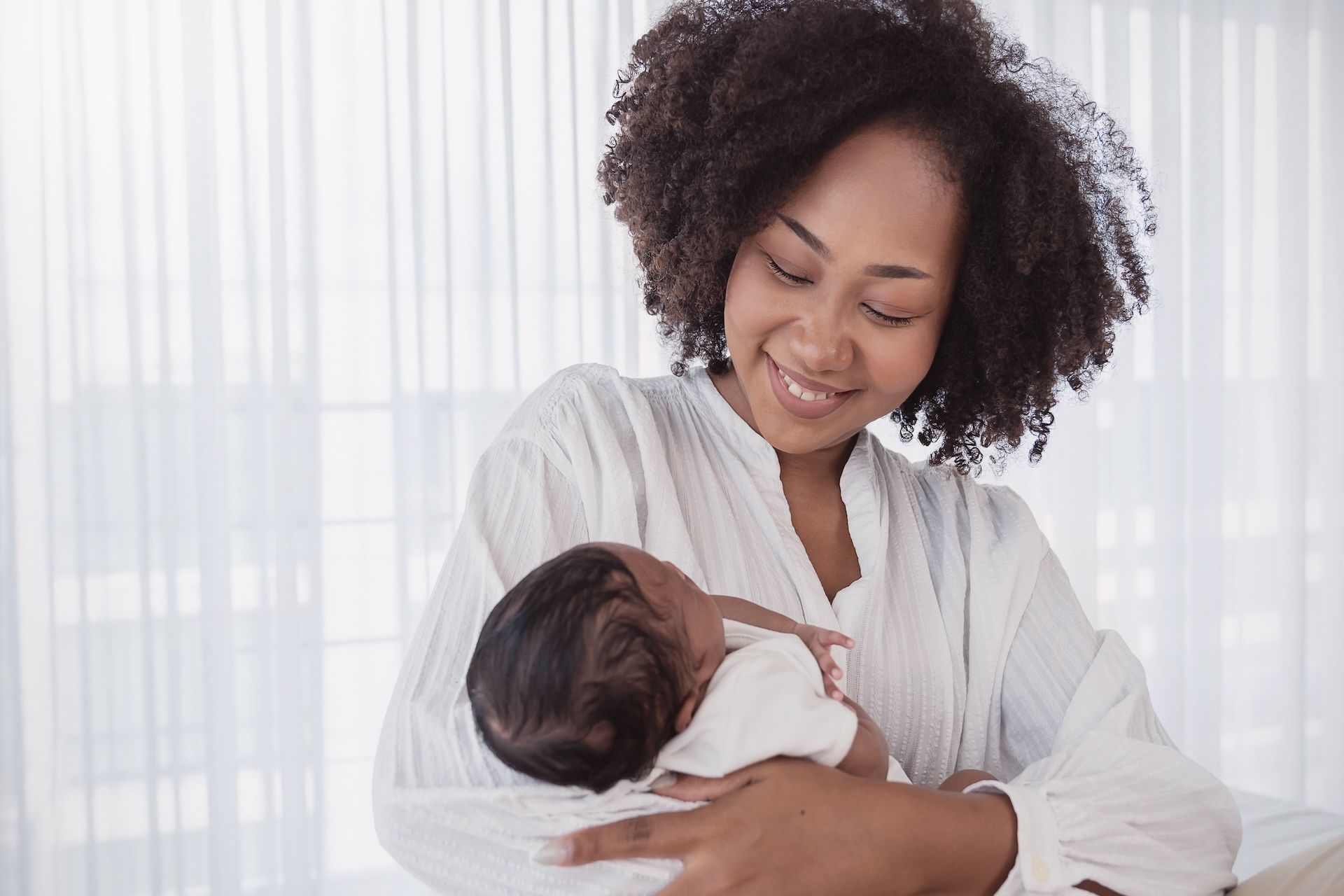
The moments immediately after birth mark the beginning of a new yet deeply connected relationship between mother and infant. Though they are now separate beings, their bond remains intensely intertwined in a symbiotic relationship—one that nurtures, sustains, and supports both. 


The word "symbiosis" originates from the Ancient Greek "σύν" (together) and "βίωσις" (living), beautifully encapsulating this critical early period where mother and baby live in close, mutual dependence. During this time, each provides something essential to the other, fostering survival, emotional security, and a foundation for lifelong attachment.


The Newborn’s Dependence on the Mother


Human infants enter the world in a state of immense dependency. Due to the evolutionary growth of the brain, babies are born before they reach full developmental maturity—an adaptation necessary to ensure a safe passage through the birth canal. This means that, unlike many other species, a human newborn requires continuous care and support in order to thrive. Infants’ nervous systems, movement, and even digestion are still developing outside the womb, making maternal presence essential for their adaptation to life beyond the confines of their prenatal environment.


The Mother’s Need for the Newborn


While the newborn’s need for the mother is evident, the mother’s need for her infant is just as profound. After birth, a mother’s body requires the baby’s presence to complete the physiological transition of childbirth. 


Skin-to-skin contact and immediate breastfeeding trigger the release of oxytocin, which aids in contracting the uterus, expelling the placenta, and reducing the risk of postpartum hemorrhage. Additionally, prolactin, another key hormone stimulated through breastfeeding, deepens maternal attachment and fosters the nurturing instinct. As Ashley Montagu explains in her book, Touching:


“Psychologically, this intensification serves further to consolidate the symbiotic bond between herself and her child. In this bonding between mother and child, the first few minutes after birth are important. This is the beginning of that time when mother and baby are literally getting in touch with one another.”


This early connection is not just physical—it is deeply emotional. The mother’s body, heart, and mind undergo a transformation, developing an instinctive responsiveness to her baby’s needs. The mutual dependency between mother and child is what makes this period so unique and essential.


The Newborn’s Transition: Finding Security in the Familiar


Emerging into the external world is a dramatic shift for newborns. The womb was a place of warmth, movement, and constant sound—their mother’s heartbeat, breath, and voice. Birth catapults them into an unfamiliar space filled with new sensations, but certain elements can help bridge this transition. When held close, newborns find comfort in their mother’s scent, heartbeat, and voice—familiar reference points that reassure and provide continuity between the prenatal and postnatal worlds.


Meeting the Newborn’s Five Immediate Needs


Newborns enter life with five fundamental needs that ensure their smooth adaptation:


  • Direct contact with the mother
  • Adherence to biological rhythms
  • Temporal, physical, and social order
  • Space for unhindered vision and movement
  • Opportunities to explore with all the senses


These needs are met through three essential aspects of the mother-child relationship: holding, handling, and feeding.


Holding: The First Experience of Love


Holding, especially skin-to-skin contact, is crucial in the moments and weeks after birth. Being held provides the newborn with reassurance and an immediate sense of belonging. As Montagu describes in Touching:


“It is through body contact with the mother that the child makes its first contact with the world, through which he is enfolded in a new dimension of experience, the experience of the world of the other.”


Through touch, infants absorb the warmth, rhythm, and security of their mothers. This experience lays the foundation for trust, emotional stability, and future social bonds.


Handling: Loving, Intentional Care


Every interaction—bathing, changing, dressing—provides an opportunity for meaningful communication. Handling should be done with love and respect, fostering collaboration between caregiver and infant. When approached with attentiveness and predictability, these routine interactions create security and help the baby integrate into the social world with confidence.


Feeding: A Relationship Beyond Nutrition


Feeding, particularly breastfeeding, is not just about nourishment—it is about connection. The act of nursing stimulates hormones in both mother and baby, supporting digestive development, immune function, and emotional bonding. In fact, as the baby nurses, twenty different gastrointestinal hormones are released in the mother and infant, which stimulates the growth of the baby’s intestines and increases calorie absorption. 


How feeding happens also matters. Even though newborns need guidance, we want to allow them to initiate suckling, as this reinforces their autonomy and natural rhythms. This early dynamic of mutual responsiveness creates a foundation of trust—ensuring children feel safe, heard, and secure in their ability to have their needs met.


The Lasting Impact of the Symbiotic Period


The symbiotic period, spanning approximately six to eight weeks, is foundational in shaping the infants’ perception of the world. Babies who experience warmth, responsiveness, and consistency in these early weeks develop an intrinsic trust in their environment. Likewise, through this deep connection, the mother gains confidence in her role and solidifies her bond with her child.


The profound mutual dependence of the symbiotic period is not just about survival—it is about building a relationship of love, trust, and security that serves as the blueprint for infants’ future interactions. By embracing this period with intention, awareness, and tenderness, both mother and baby emerge from it transformed—ready to take on the next stages of growth, hand in hand.


In Montessori, we are intentional about how we support each stage of development. Contact us to learn more! 

montessori children with guide in tea lesson
June 26, 2026
We’re opening our doors for a special campus tour and we'd love for you to join us!
Three young children sitting on a couch, smiling in a bright indoor room.
June 15, 2026
Connect the Montessori classroom to nature. Discover how exploring Montana’s rivers helps young children develop spatial awareness and environmental respect.
Two children kneel on a classroom rug behind a colorful block maze on the floor.
June 1, 2026
In the Montessori tradition, we talk a lot about "following the child." Sometimes people mistake this for letting a child do whatever they want. But as those of us who have been in the trenches know, following the child actually means observing them through developmental periods so thoughtfully that we understand what they need before they even have the words for it. When it comes to mental health, this observation is our greatest tool, as it helps us prepare. Mental health in childhood includes resilience, the security of belonging, and the development of an "inner voice" that tells a child they are capable, eventually serving as their source of internal guidance. Supporting this development requires us adults to shift from being managers of their behavior to loving guardians of their emotional environment. The Foundation: Safety and Routine For children in the first plane of development (birth to age 6), the groundwork for mental health is laid through warm, secure relationships. In Montessori terms, this is the "prepared environment” of connection. We often say that children need consistency like they need air. We provide stability through routine—not a rigid schedule, but a predictable rhythm. When a child knows what comes next, their nervous system relaxes. Simple acts like involving them in everyday moments—letting them slice a banana or fold washcloths—give them a sense of agency. A child who contributes to the world around them is a child who feels capable and valued. This sense of "I can do it" is important, and sometimes we just have to get out of the way. The Elementary Years: The Why and the Who As children move into the second plane of development (ages 6–12), their mental health needs shift toward social belonging and moral understanding. This is the age of "Why?" and "That’s not fair!" At this stage, adults can check in on their feelings through everyday events. Did they get into a fight with their friend? Don’t rush to fix the sadness. Instead, sit with them in it. We can support their mental health by giving them the tools to solve their own social problems. Ask, "What do you think would help you feel better?" rather than handing them the solution. This builds the self-efficacy that helps buffer against anxiety and depression later in life. Learning the Hard Way Mental health isn't about avoiding the scary or hard things that come with growing up; it's about making sure your child never has to face them alone. It’s about cuddles, and hugs, and playing with your kids. It’s about recognizing that a tantrum isn't an attack on your parenting—it’s a child whose inner "prepared environment" has temporarily collapsed, and they need you to help them rebuild it. The Parent’s Work (The Inner Preparation) In Montessori, the "prepared adult" must do their own inner work to best be able to guide a child. Parenting can feel messy, and it rarely looks like the peaceful, perfectly-balanced life we might have imagined. Here is how to keep your own foundation solid: Honoring the "Gap": Make peace with the fact that your reality may not match your expectations. There will be days when you are not the “calm, cool and collected“ model you want to be. Forgive yourself. Your children don’t need a perfect parent; they need a regulated one who can apologize when they mess up and move forward. Mindful Co-Parenting: Whether you live in the same house or two, communication between co-parents must be clear and boundary-honoring. Children are emotional barometers; they feel the pressure of unspoken conflict. Aim for "functional transparency"—share the necessary information about the child’s needs without using the child as a messenger. Self-Care is Not a Luxury: You cannot pour from an empty vessel. In the Montessori classroom, a tired, burnt-out adult is not the example we want to set, nor is it an effective one. Taking ten minutes for a quiet tea or a solo walk isn't "ignoring" your kids; it’s calibrating your instrument so you can be the calm center they need. Boundaries as Love: Setting a boundary for yourself ("I need 5 minutes of quiet before I can help with that") teaches your child that you are a human with needs. This honors your humanity and models for them how to protect their own mental health in the future.
Children sit in a circle around a teacher at a table, sharing a small activity in a classroom.
May 18, 2026
Overbooking your child's summer? Learn why unstructured downtime and embracing a little boredom are vital for nurturing your child's creativity.
Montessori child working in the classroom
May 18, 2026
We’re opening our doors for a special campus tour and we'd love for you to join us! 
May 4, 2026
Discover how Montessori education champions character development, physical autonomy, and personal best over the cultural pressure of competition.
A child with hair in small buns sits at a wooden table, painting on a sheet of paper with a small brush.
April 27, 2026
Discover how peer learning, meaningful context, adult interaction, and order align Montessori with the science of how children learn best.
Two children hang pieces of fabric on a wooden drying rack inside a classroom.
April 20, 2026
Does Montessori work? Explore the research behind movement, choice, interest, and intrinsic motivation in Montessori: The Science Behind the Genius.
April 16, 2026
Saturday, April 25th, 9:00 am - Noon Bozeman Montessori South Campus: 233 Enterprise Blvd, Bozeman, MT 59718 Bozeman Montessori North Campus: 3774 Equestrian Lane, Bozeman, MT 59718
An adult in a green trench coat holds hands with a child wearing a pink jacket, walking together in an outdoor area.
April 13, 2026
When we lose our cool, repair matters most. Explore accountability, curiosity, and connection to break reactive cycles and parent with intention.
Show More