Supporting Children's Social Lives

January 6, 2025

We’ve all experienced it. Those days when our children come home feeling the sting of a recess exclusion, a series of slights from a friend, or some other social discontent. They unload their hurt onto us, and we feel heavy with the weight of their pain. 


Childhood is a time of profound social development. Our children are navigating their social lives, and learning how to handle social struggles is a process that can ultimately build resilience, empathy, and problem-solving skills. Social challenges are a normal and essential part of childhood development. But that doesn’t make the process any easier (especially for us as parents!).


Letting the Process Unfold


When our children come to us and unload their latest story of social exclusion, teasing, or friendship drama, it is important to make sure they feel heard. This means our job is to reflect back what we hear in an empathetic way, while also acknowledging any hurt or complex feelings. In practice, this may sound something like, “Wow, it sounds like you were feeling really hurt when your friend stormed away from you during the game at recess.” Our children need to know that they can vent and that we will listen. 


Avoid Getting Too Involved


We are hard-wired to want to shield our children from pain. As a result, instead of just listening and acknowledging, we can tend to hold onto our children’s hurt feelings and may even feel compelled to intervene. 


Unfortunately, our intention to alleviate the pain can often have unintended consequences. Sometimes, our intervention may be that we regularly check in with our children about the social dynamic. For example, the next day asking, “How did it go with your friend during the game at recess today?” We don’t realize that our children have often moved on from the previous day’s hurt. Childhood friendships and social interactions ebb and flow multiple times a day.


But when we keep harking back to hurt, we inadvertently do what psychologist Michael Thompson calls “interviewing for pain.” In doing so, we refocus our children’s experience on one incident they have likely mostly forgotten. Each day, when we ask again about that friendship or social interaction, our children either realize that this topic really gets our attention and/or begin to think of themselves as victims. 


Support Problem Solving


Instead of “interviewing for pain,” we can ask questions that support our children’s problem-solving skills. So, after acknowledging the hurt feelings when our children first share them, we can plant some problem-solving seeds, “I wonder how you are going to handle a situation like this in the future.” Or, if we are really concerned about our child’s emotional or physical safety, we can check in about what they need, “This seems like a serious situation. Do you feel like this is something that needs to be communicated to your teacher? How can I support you in getting some help?” 


Non-interference doesn’t mean neglect or ignoring something serious. Instead, we are focusing on encouraging our children to talk about their feelings without solving the problem for them, offering perspective or guidance only when asked, and observing from a distance unless safety is at risk. 


If we recognize red flags (such as ongoing bullying or harmful behaviors), we can step in thoughtfully by collaborating with our children to find solutions, which may include consulting with teachers or counselors if necessary. Ideally, this is done with our children’s awareness so they aren’t blindsided by others knowing what they shared with us, especially if they thought they were sharing it in confidence. 


A Developmental Necessity


Ultimately, our children learn to navigate the complexities of human relationships through their own experiences. The ups and downs of social interactions are opportunities for growth in emotional resilience, conflict resolution skills, understanding social boundaries, empathy, problem-solving, and independence and confidence. 


Think about the many benefits. Social setbacks, such as disagreements or feelings of exclusion, help children cope with disappointment and bounce back. Arguments and misunderstandings teach children how to resolve conflicts constructively. Through trial and error, our children learn to negotiate, apologize, and compromise—skills essential for healthy relationships throughout life. They learn about boundaries and how we all impact each other in different ways, leading to insights into different perspectives and feelings.


Social challenges push children to think creatively about how to navigate tricky situations. Each successful navigation of a social challenge reinforces our children’s belief in their ability to handle similar situations in the future. This builds self-esteem and independence and helps our children realize they don’t always need an adult to solve their problems.


By stepping back and allowing children to experience and work through these situations on their own, we give our children the space to develop essential life skills. The key is to provide a supportive environment where children feel safe to share their feelings and seek advice.


A Foundation for the Future


Rest assured, our children have an amazing ability to learn and grow from social experiences. By not interfering in our children’s social lives, we show a tremendous act of love that empowers them to build the skills they’ll need for lifelong social success. 


Remember, childhood social interactions lay the foundation for future relationships in school, work, and personal life. Navigating these early challenges helps children develop teamwork, compromise, and emotional intelligence skills that will benefit them throughout their lives. Our children need us to let the process unfold, avoid getting involved, and support their problem-solving. In doing so, we are sending our children an important message that we believe in them and their ability to handle challenges. 


Interested in learning more?
Schedule a visit to see how our classrooms support healthy social learning.
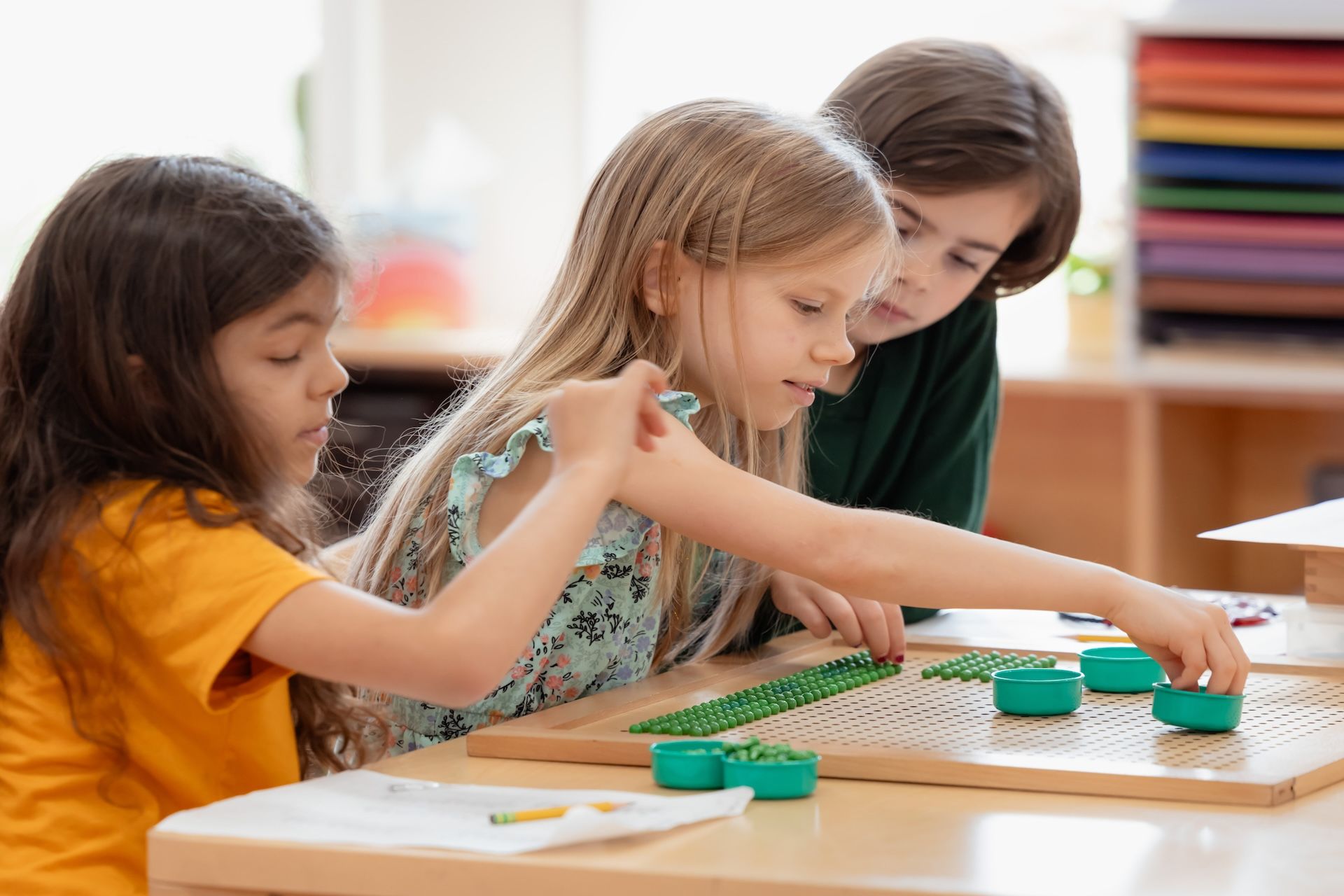
Teacher helping children at a table with a board game in a classroom
July 30, 2026
Come see the Montessori environment in action! Now enrolling for the 2026-2027 school year.
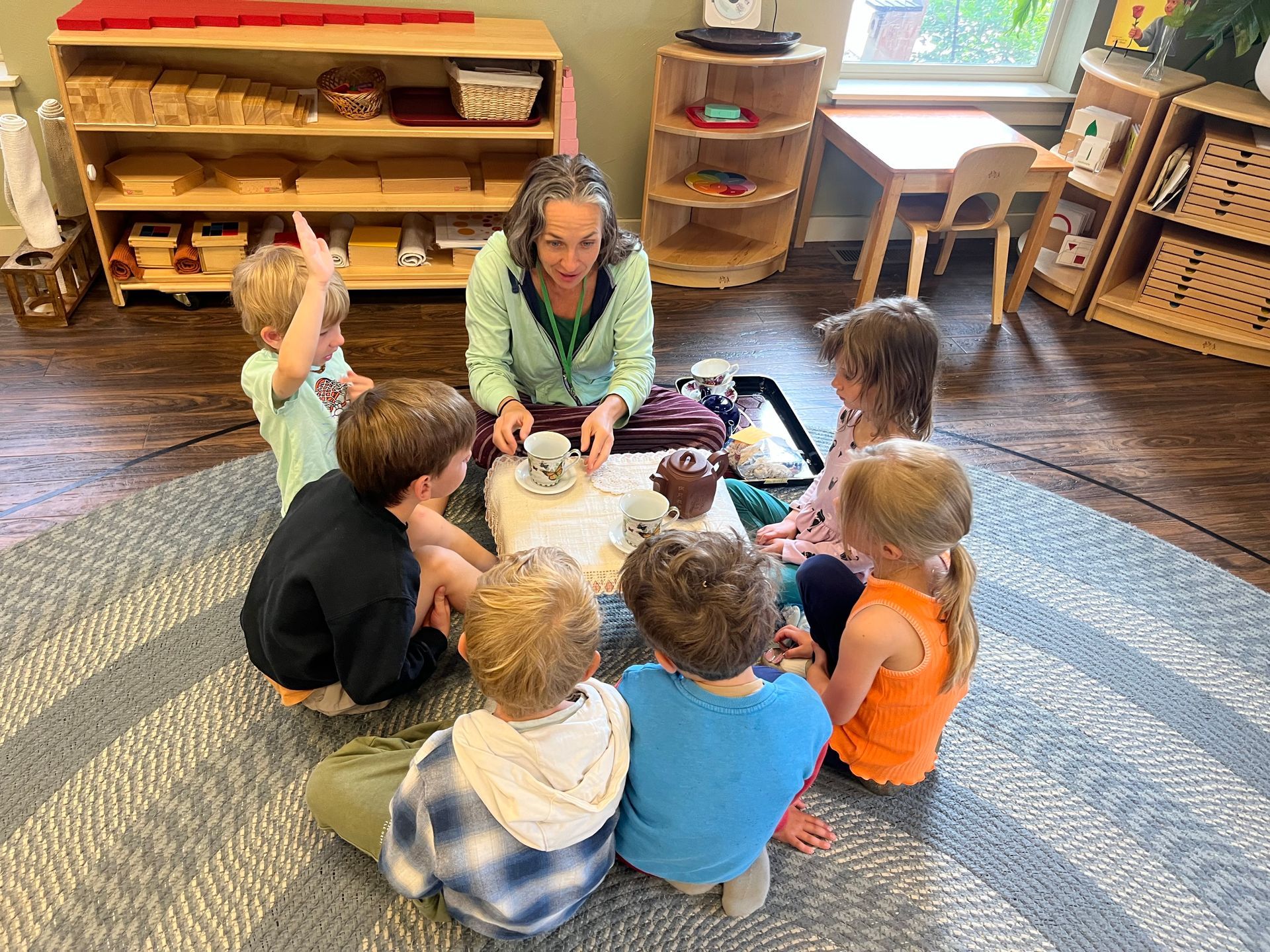
montessori children with guide in tea lesson
June 26, 2026
We’re opening our doors for a special campus tour and we'd love for you to join us!
Three young children sitting on a couch, smiling in a bright indoor room.
June 15, 2026
Connect the Montessori classroom to nature. Discover how exploring Montana’s rivers helps young children develop spatial awareness and environmental respect.
Two children kneel on a classroom rug behind a colorful block maze on the floor.
June 1, 2026
In the Montessori tradition, we talk a lot about "following the child." Sometimes people mistake this for letting a child do whatever they want. But as those of us who have been in the trenches know, following the child actually means observing them through developmental periods so thoughtfully that we understand what they need before they even have the words for it. When it comes to mental health, this observation is our greatest tool, as it helps us prepare. Mental health in childhood includes resilience, the security of belonging, and the development of an "inner voice" that tells a child they are capable, eventually serving as their source of internal guidance. Supporting this development requires us adults to shift from being managers of their behavior to loving guardians of their emotional environment. The Foundation: Safety and Routine For children in the first plane of development (birth to age 6), the groundwork for mental health is laid through warm, secure relationships. In Montessori terms, this is the "prepared environment” of connection. We often say that children need consistency like they need air. We provide stability through routine—not a rigid schedule, but a predictable rhythm. When a child knows what comes next, their nervous system relaxes. Simple acts like involving them in everyday moments—letting them slice a banana or fold washcloths—give them a sense of agency. A child who contributes to the world around them is a child who feels capable and valued. This sense of "I can do it" is important, and sometimes we just have to get out of the way. The Elementary Years: The Why and the Who As children move into the second plane of development (ages 6–12), their mental health needs shift toward social belonging and moral understanding. This is the age of "Why?" and "That’s not fair!" At this stage, adults can check in on their feelings through everyday events. Did they get into a fight with their friend? Don’t rush to fix the sadness. Instead, sit with them in it. We can support their mental health by giving them the tools to solve their own social problems. Ask, "What do you think would help you feel better?" rather than handing them the solution. This builds the self-efficacy that helps buffer against anxiety and depression later in life. Learning the Hard Way Mental health isn't about avoiding the scary or hard things that come with growing up; it's about making sure your child never has to face them alone. It’s about cuddles, and hugs, and playing with your kids. It’s about recognizing that a tantrum isn't an attack on your parenting—it’s a child whose inner "prepared environment" has temporarily collapsed, and they need you to help them rebuild it. The Parent’s Work (The Inner Preparation) In Montessori, the "prepared adult" must do their own inner work to best be able to guide a child. Parenting can feel messy, and it rarely looks like the peaceful, perfectly-balanced life we might have imagined. Here is how to keep your own foundation solid: Honoring the "Gap": Make peace with the fact that your reality may not match your expectations. There will be days when you are not the “calm, cool and collected“ model you want to be. Forgive yourself. Your children don’t need a perfect parent; they need a regulated one who can apologize when they mess up and move forward. Mindful Co-Parenting: Whether you live in the same house or two, communication between co-parents must be clear and boundary-honoring. Children are emotional barometers; they feel the pressure of unspoken conflict. Aim for "functional transparency"—share the necessary information about the child’s needs without using the child as a messenger. Self-Care is Not a Luxury: You cannot pour from an empty vessel. In the Montessori classroom, a tired, burnt-out adult is not the example we want to set, nor is it an effective one. Taking ten minutes for a quiet tea or a solo walk isn't "ignoring" your kids; it’s calibrating your instrument so you can be the calm center they need. Boundaries as Love: Setting a boundary for yourself ("I need 5 minutes of quiet before I can help with that") teaches your child that you are a human with needs. This honors your humanity and models for them how to protect their own mental health in the future.
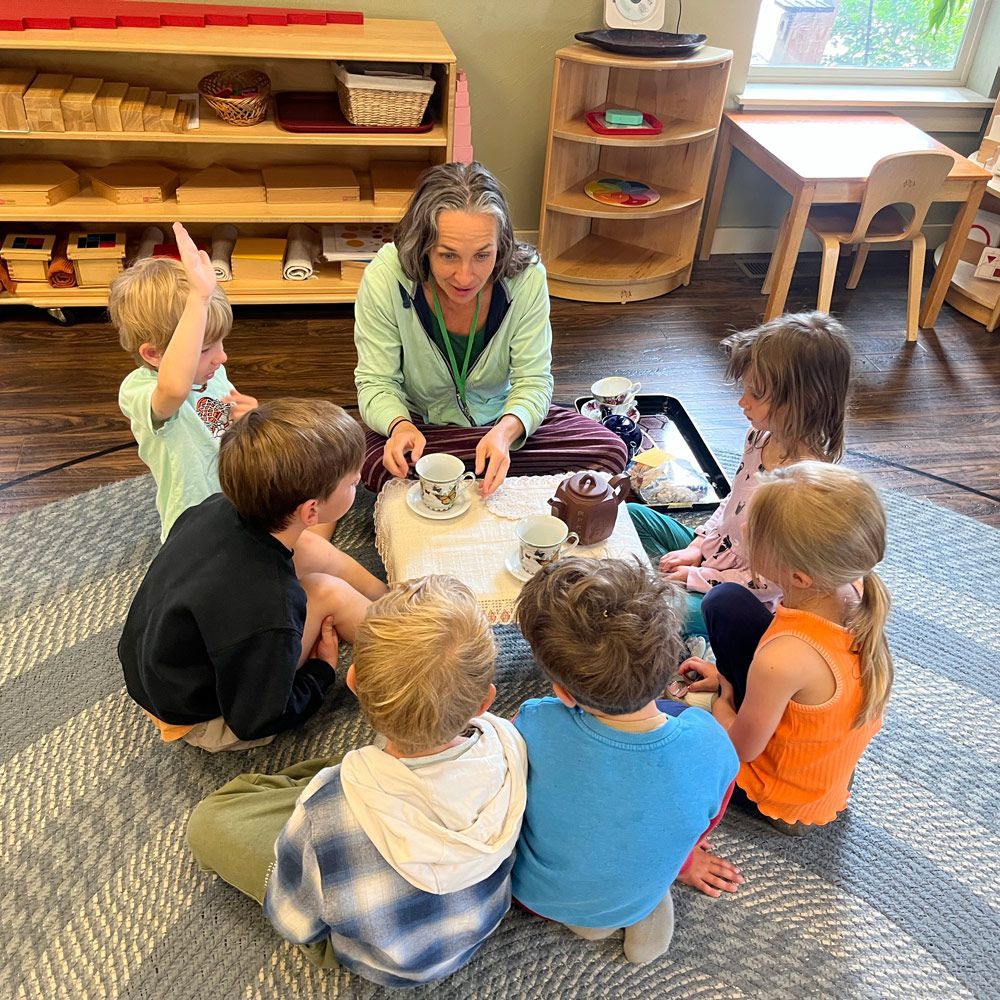
Children sit in a circle around a teacher at a table, sharing a small activity in a classroom.
May 18, 2026
Overbooking your child's summer? Learn why unstructured downtime and embracing a little boredom are vital for nurturing your child's creativity.
Montessori child working in the classroom
May 18, 2026
We’re opening our doors for a special campus tour and we'd love for you to join us! 
May 4, 2026
Discover how Montessori education champions character development, physical autonomy, and personal best over the cultural pressure of competition.
A child with hair in small buns sits at a wooden table, painting on a sheet of paper with a small brush.
April 27, 2026
Discover how peer learning, meaningful context, adult interaction, and order align Montessori with the science of how children learn best.
Two children hang pieces of fabric on a wooden drying rack inside a classroom.
April 20, 2026
Does Montessori work? Explore the research behind movement, choice, interest, and intrinsic motivation in Montessori: The Science Behind the Genius.
April 16, 2026
Saturday, April 25th, 9:00 am - Noon Bozeman Montessori South Campus: 233 Enterprise Blvd, Bozeman, MT 59718 Bozeman Montessori North Campus: 3774 Equestrian Lane, Bozeman, MT 59718
Show More