Our Montessori Bookshelf (and Music Shelf!)
In the Montessori approach, we consider music to be a form of language. As such, we incorporate singing and music into daily life.
So, this month, in addition to sharing some of our favorite books from our bookshelves, we’re also offering songs that complement the books’ content. Whether you read these books aloud to your children or offer them as options for independent exploration and enjoyment, we hope you’ll incorporate a little singing into your family life!
We find music provides a wonderful form of bonding. In fact, several studies confirm that listening to music and singing together can strengthen social bonds.
We have also included a printable list of the book titles to take with you to the local bookstore or library, as well as the song lyrics for when you practice the tunes!
Be sure to also come visit us here in Bozeman, MT, to hear (or join in) some melodies!
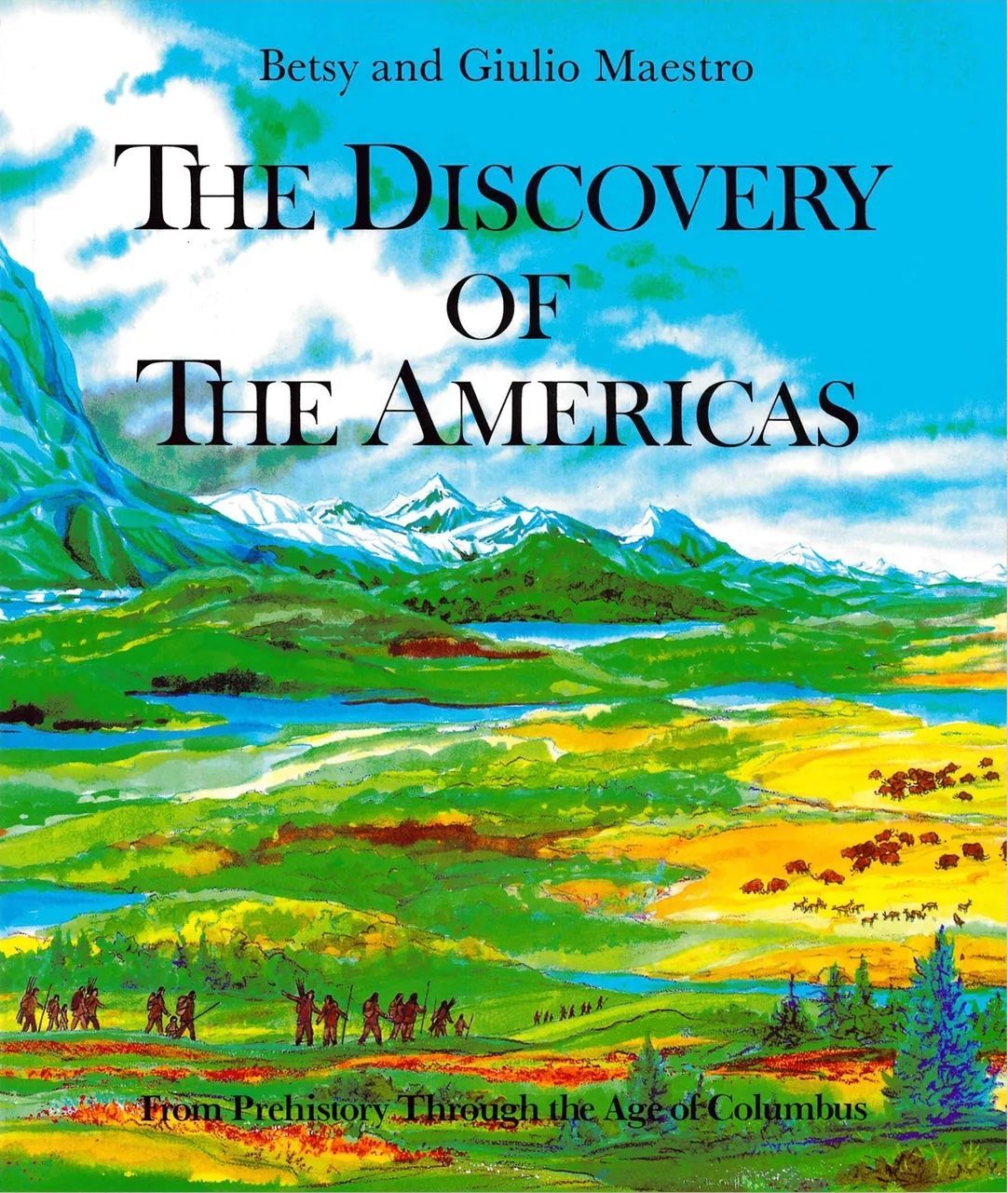
The Discovery of the Americas: From Prehistory Through the Age of Columbus
By Betsy and Giulio Maestro
History can sometimes be oversimplified for children, however, The Discovery of the Americas shares the many facets of human migration over a span of about twenty thousand years. But thanks to clear writing and illustrations, this complex story is completely accessible and incredibly engaging. For those wanting more details, the authors provide a timeline of dates and additional information at the end of the book. This is a must-read for children and adults!
Accompanying Song: “Indigenous People's Day – 1492”
By Nancy Schimmel
“In 1492 Columbus sailed the ocean blue.
It was a courageous thing to do.
But someone was already here. (Repeat)
The Inuit and Cherokee, the Aztec and Menominee,
Onandoga and the Cree
Columbus sailed across the sea,
but someone was already here.
Columbus knew the world was round.
So he looked for the East while westward bound.
But he didn’t find what he thought he found,
And someone was already here.
The Inuit and Cherokee, the Aztec and Menominee, Onandoga and the Cree
Columbus sailed across the sea, but someone was already here.
It isn’t like it was empty space
The Caribs met him face to face.
Could anyone discover the place
When someone was already here?
The Inuit and Cherokee, the Aztec and Menominee,
Onandoga and the Cree
Columbus sailed across the sea,
but someone was already here.
So tell me who discovered what,
He thought he was in a different spot.
Columbus was lost. The Caribs were not.
They were already here!”
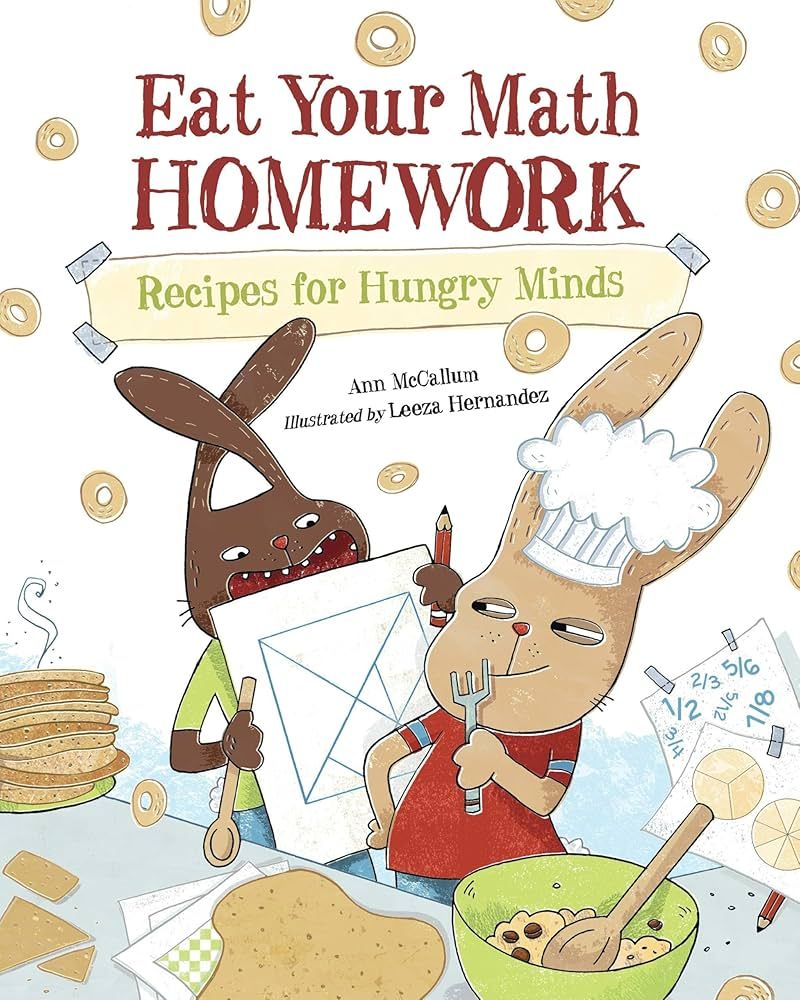
Eat Your Math Homework: Recipes for Hungry Minds
By Ann McCallum, Illustrated by Leeza Hernandez
If you are looking for a fun way to engage children's mathematical minds (and maybe even help them fall in love with math), this book is just what you need! The author uses cooking projects as a way to introduce and explore concepts like the Fibonacci sequence, fractions, tessellations, tangrams, pi, and probability. Based on children’s level of interest, the focus can extend beyond the food preparation into fun and memorable follow-up activities. With tantalizing snippets of information, zany illustrations, and simple recipes, this is a sure-fire way to find something that will satisfy your children!
Accompanying Song: “The Pi Song”
By Mitchell Moffit
“3.14159 this is pi, followed by
2653589 circumference over di-ameter
7-9 then 323 o-m-g, can’t you see?
8462643 and now we’re on a spree
38 and 32 now we’re blue, oh who knew!
7 thousand 9 hundred 50 and then 2
88 and 41, so much fun, now a run!
97 16939937 51 - halfway DONE
058 now don’t be late, 209 where’s the wine
7-4 it’s on the floor, then 9-4-4-5-9
230 we gotta go, 78 we can’t wait
1640628, we’re almost near the end keep going
62 we’re getting through, 089-9 on time
8628034 there’s only a few more
8-2 then
5-3
42-11-7-0 and 67
We’re done!
Was that fun?
Learning random digits so that you can brag to your friends”
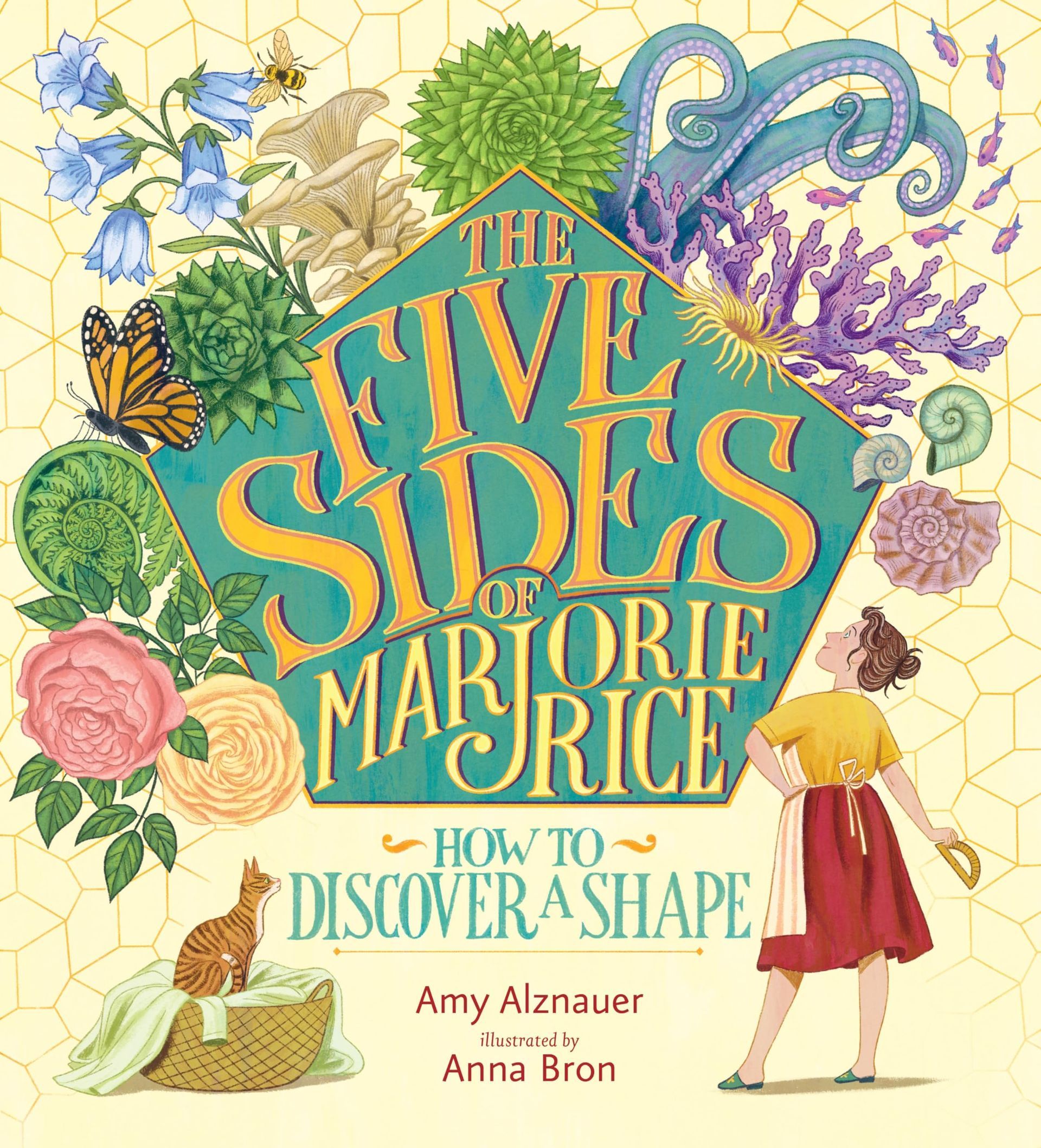
The Five Sides of Marjorie Rice: How to Discover a Shape
By Amy Alznauer, Illustrated by Anna Bron
This true story is an inspiration for people of all ages! This charming story begins when Marjorie Rice was a young girl fascinated by art and geometry. Woven throughout the fabric of her story, the author provides insights into the history of patterns, tiling pentagons, and the power of being determined. After reading this book, you’ll want to make your own mathematical discoveries! Be sure to also check out the author’s note and tips for discovering a shape at the end of the book.
Accompanying Song: “The Polygon Song”
By Peter Weatherall
“na na na na na na
just a boring square
I wish I was a pentagon but
I am just a square
I wish I was a pentagon but
I am just a square
my sides equal four
but if I had one more
then I’d be a pentagon
and not a square
na na na na na na
just a boring square
I wish I was a hexagon but
I am just a square
if I was a hexagon
then I wouldn’t care
My sides would equal six
If they were made of sticks
then I’d be a hexagon
and not a square
I’ve always been a square
and it just isn’t fair
because I’ve wanted more
than sides that equal four
na na na na na na
just a boring square
I wish I was a heptagon but
I am just a square
if I was a heptagon
then I wouldn’t care
My sides would equal seven
and I would be in heaven
if I were a heptagon
and not a square
na na na na na na
just a boring square
I wish I was a octagon but
I am just a square
if I was a octagon
then I wouldn’t care
My sides would equal eight
and that would be just great
if I were an octagon
and not a square
I’ve always been a square
and it just isn’t fair
because I’ve wanted more
than sides that equal four
na na na na na na
just a boring square
I wish I was a nonagon but
I am just a square
if I was a nonagon
then I wouldn’t care
My sides would equal nine
and that would be just fine
if I were an nonagon
and not a square
So you want to have more than four sides
Is it possible?
Anything is possible for Dr. Polygon
Ooh! What are you doing?
Bisecting ze diagonal by ze square root of the hypotenuse!
Please, no, not that!
Aah! You squares are so obtuse! There! All done
Well now I am a decagon
and not a square
now I am a decagon
and very rare
I won’t complain again
‘Cause my sides equal ten
I am a decagon
and not a square
when I was just a square
and I thought it wasn’t fair
so I had surgery
to my geometry
NOW LOOK AT ME!
na na na na na na
not a boring square”
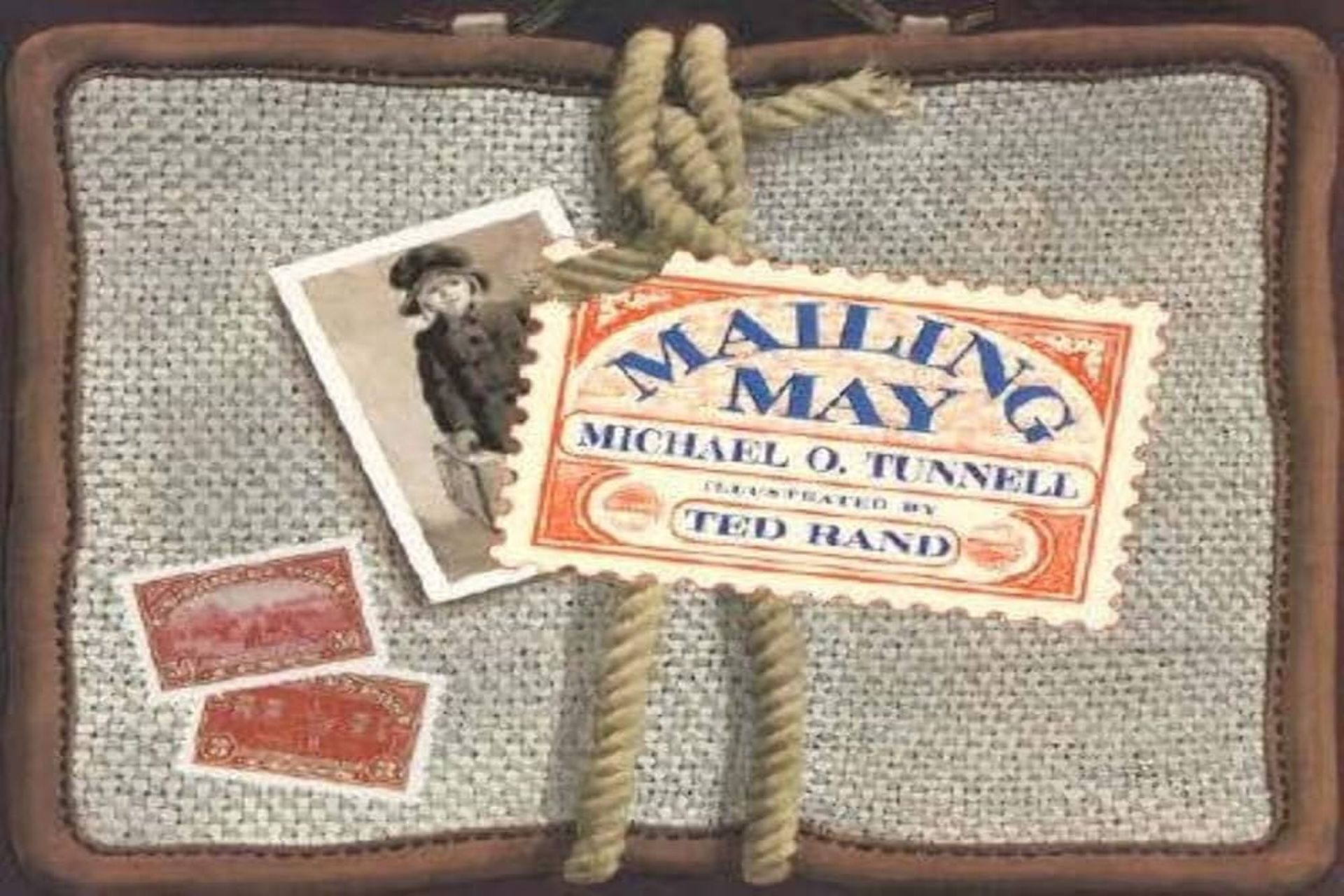
By Michael O. Tunnell, Illustrated by Ted Rand
Based on a true story, this picture book tells the account of a young girl’s desire to visit her grandmother and how her parents found a creative way to afford the train trip. Young readers will be captivated by the realistic illustrations, lively dialogue, and the delight of young May’s perspective as she travels in a train’s mail car with a relative who happened to be a mail carrier.
Accompanying Song: “Mail Myself to You”
By Woody Guthrie
“I’m a-gonna wrap myself in paper,
I’m gonna daub myself with glue,
Stick some stamps on top of my head;
I’m gonna mail myself to you.
I’m a-gonna tie me up in a red string,
I’m gonna tie blue ribbons too,
I’m a-gonna climb up in my mailbox,
I’m gonna mail myself to you.
When you see me in your mail box,
Cut the string and let me out;
Wash the glue off of my fingers,
Stick some bubble gum in my mouth.
Take me out of my wrapping paper,
Wash the stamps off of my head;
Pour me full of ice cream sodies,
Put me in my nice warm bed.”