Ancestral Currents: Young Children and the Wisdom of Montana’s Waterways
There is a moment that every Montana parent knows. You are standing at the edge of a creek—maybe the East Gallatin or a ribbon of snowmelt threading through a high-mountain meadow—and you share a quiet moment listening to the flow. Trees rustle in the breeze, a bird chatters from a willow, and clouds float overhead. Something peaceful unfolds between you, your child, and the environment that feels bigger than the sum of its parts.
Montana’s rivers, creeks, lakes, and ponds are among the most extraordinary classrooms available to children. Summer is our invitation to enter these spaces joyfully, intentionally, and with appreciation for what they have always meant to the people who have passed through here for millennia. When we bring our children to Montana’s waters—whether to paddle, fish, or explore—we are entering a place hallowed by those who have come before us.
The Ripples of Development
From a Montessori perspective, water is one of the richest environments we can offer a developing mind. It provides a "sensorial" feast that helps fine-tune a child’s understanding of the physical world.
- Infants are often calmed by the rhythm of moving water, which echoes the muffled sounds of the womb. They are naturally drawn to water!
- Toddlers discover physics through the tactile joy of splashing and displacement. To a two-year-old, the way a heavy stone creates a "plunk" while a leaf dances on the surface is a high-level experiment in density and buoyancy.
- Preschoolers engage in the experimental work of natural science. They are keen observers, asking the big questions: Why does this rock sink? Where does the river go? Who lives under that log?
The Map in Their Minds: Classroom Meets Creek
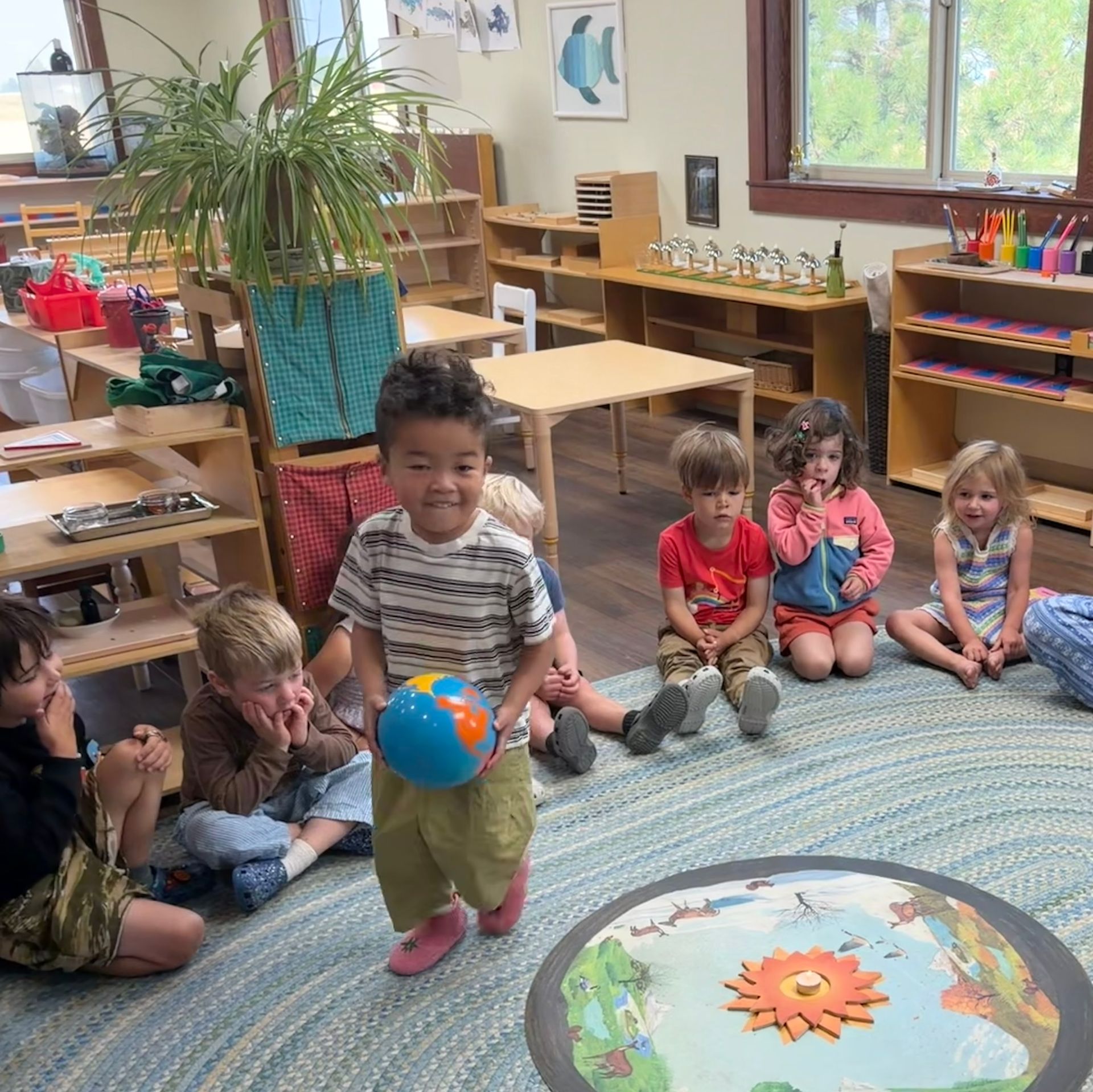
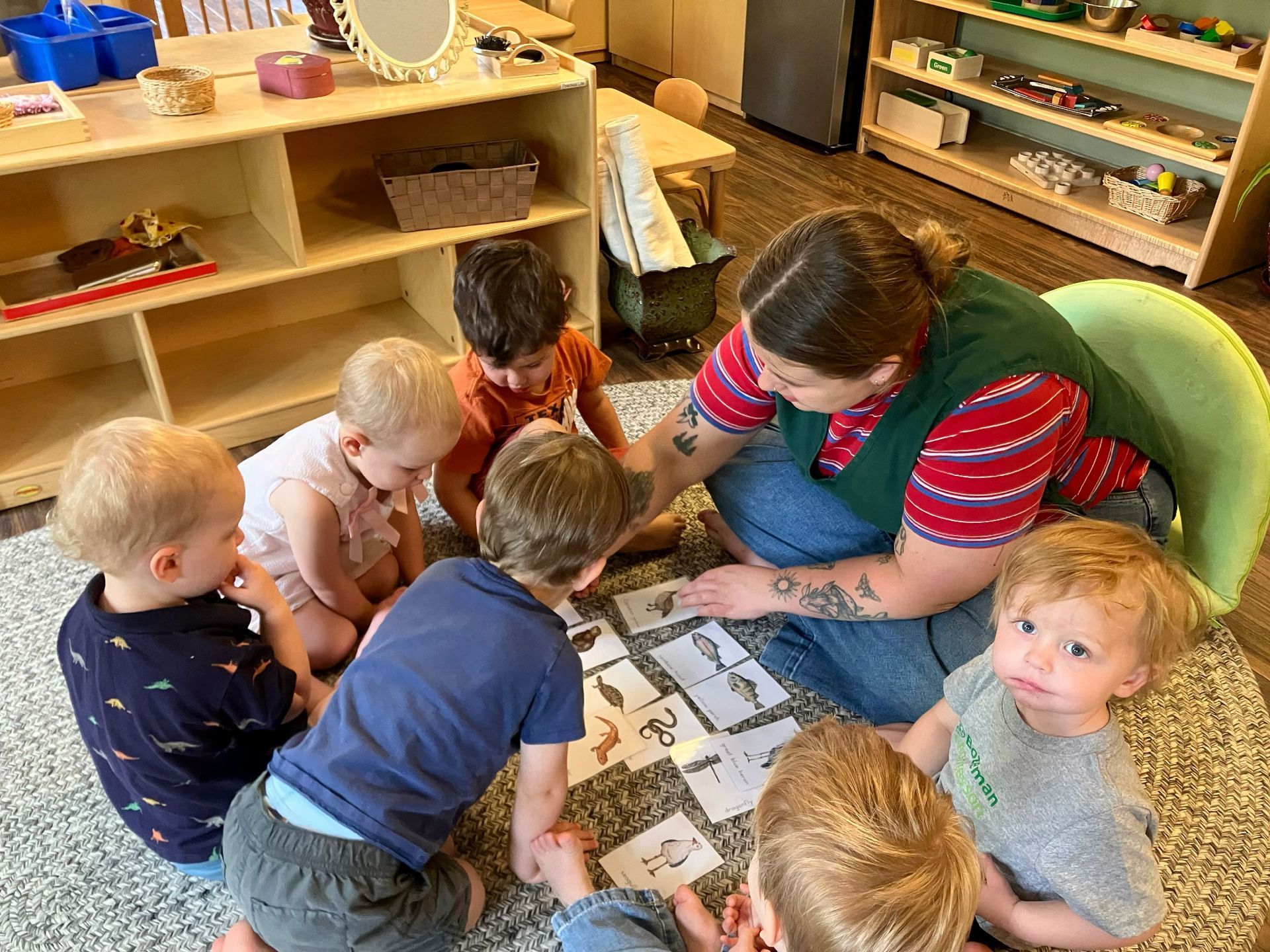
In our Montessori classrooms, children work with specialized Land and Water Form models. These are three-dimensional representations that isolate the fundamental shapes of our geography. By physically pouring water into and around these forms, a child discovers the difference between an Island and a Lake, or a Peninsula and a Gulf.
When we take our children to the banks of Canyon Ferry or the bends of a mountain creek, these classroom concepts come to life:
- The Island in the Current: In the classroom, an island is land surrounded by water. On a Montana river, it might be a gravel bar topped with willow and cottonwood. When a child recognizes it, they aren't just seeing rocks; they are identifying a geographic reality and connecting it to their internal map of the world.
- The Meandering Shoreline: As your child follows a "peninsula" of sand jutting into a quiet pool, they are practicing the spatial awareness they developed with classroom materials. They learn through their senses that land and water aren't separate entities, but dance partners that shape each other.
The Waters and Their Keepers
Montana’s waters carry thousands of years of story. For the Apsáalooke (Crow), Blackfeet, Salish, Kootenai, and Pend d’Oreille peoples, these rivers are not merely "resources"; they are "living relatives." As many Indigenous elders express: "Water is Life" (Mní Wičhóni). It is the "veins of Mother Earth," carrying the lifeblood that connects the sky, the land, and the people.
To the Apsáalooke, rivers are central to their identity and creation stories. Even today, water is used for spiritual rejuvenation after sacred ceremonies. We can honor this by teaching our children that water is vital to all life. In our arid climate, this is illustrated by the "green ribbons"—the lush galleries of cottonwoods that line our waterways, providing essential shelter for wildlife. A simple phrase, offered naturally at the water’s edge, begins this journey: "People have loved this river for a very, very long time."
An Invitation to Explore
In the Montessori classroom, we have three major ground rules: we take care of ourselves, each other, and the environment. The outdoor classroom calls for that same relationship of care. You don’t need to be a scientist to support this; you simply need to be a co-explorer. When gathered on the shore, you might say: "Look at how the water reaches into the land here. This quiet bay is a home for minnows. I wonder what we will see if we stay very quiet."
This summer, let Montana’s water be your sanctuary. Slow down. Take off your shoes and put your feet in the current. Let your child lead and see what they notice first. The river has been patient for thousands of years; it can wait while your toddler examines one perfect pebble. By connecting the classroom to the vast Montana landscape, we help our children feel truly at home in the world—one ripple at a time.