Becoming: How Montessori Supports Adolescents
September 22, 2025

Adolescence. A time when the sentiments of childhood begin to fade and the physical and emotional changes of puberty take hold. A time of dramatic transformation. 


Dr. Maria Montessori referred to this stage as the third plane of development, a time when adolescents are no longer satisfied with the protected world of childhood and instead seek something significant, purposeful, and real.


This transition is marked by a profound inner shift. Adolescents begin to separate emotionally from their families and look outward toward society, searching for connection, relevance, and identity. They want to be seen as capable individuals who can live their own lives. There is a deep emotional need to be treated with dignity and to be entrusted with real responsibility.


Dr. Montessori described adolescents as “social newborns.” Having achieved functional and intellectual independence in earlier developmental stages, adolescents now turn toward economic and social independence.


This stage is filled with anticipation and restlessness. Adolescents are asking fundamental questions: How does society work? How do I fit into it? What is my role? These are urgent, developmental inquiries. Adolescents seek to make real contributions and to be recognized for them.


The Drive for Economic Independence


Among the most powerful needs of adolescents is the drive for economic independence. This isn’t just about about earning money. Rather, adolescents are compelled by the desire for worth, agency, and validation. In our society, economic activity is closely tied to adulthood, and young people intuitively understand this. They want to "try on" adulthood by participating in the same world they see shaping the lives around them.


This is a developmental necessity. Adolescents need to:


  • Act in roles of genuine responsibility
  • Succeed through their own efforts and merit
  • Understand the value of time and money
  • Be respected as individuals with something to offer


Through these experiences, adolescents are able to form themselves through meaningful contributions.


Production and Exchange: The Foundation of Social Life


In Montessori’s vision for adolescence, meaningful work is essential and at the core of adolescents’ learning. This is especially true when adolescents engage in production and exchange, the fundamental human cycle of creating value and sharing it with others.


Whether growing food, making a product, or offering a service, adolescents begin to understand how society functions through work. They see how individuals and groups contribute to a larger system. Effort, collaboration, and mutual need shape our social fabric.


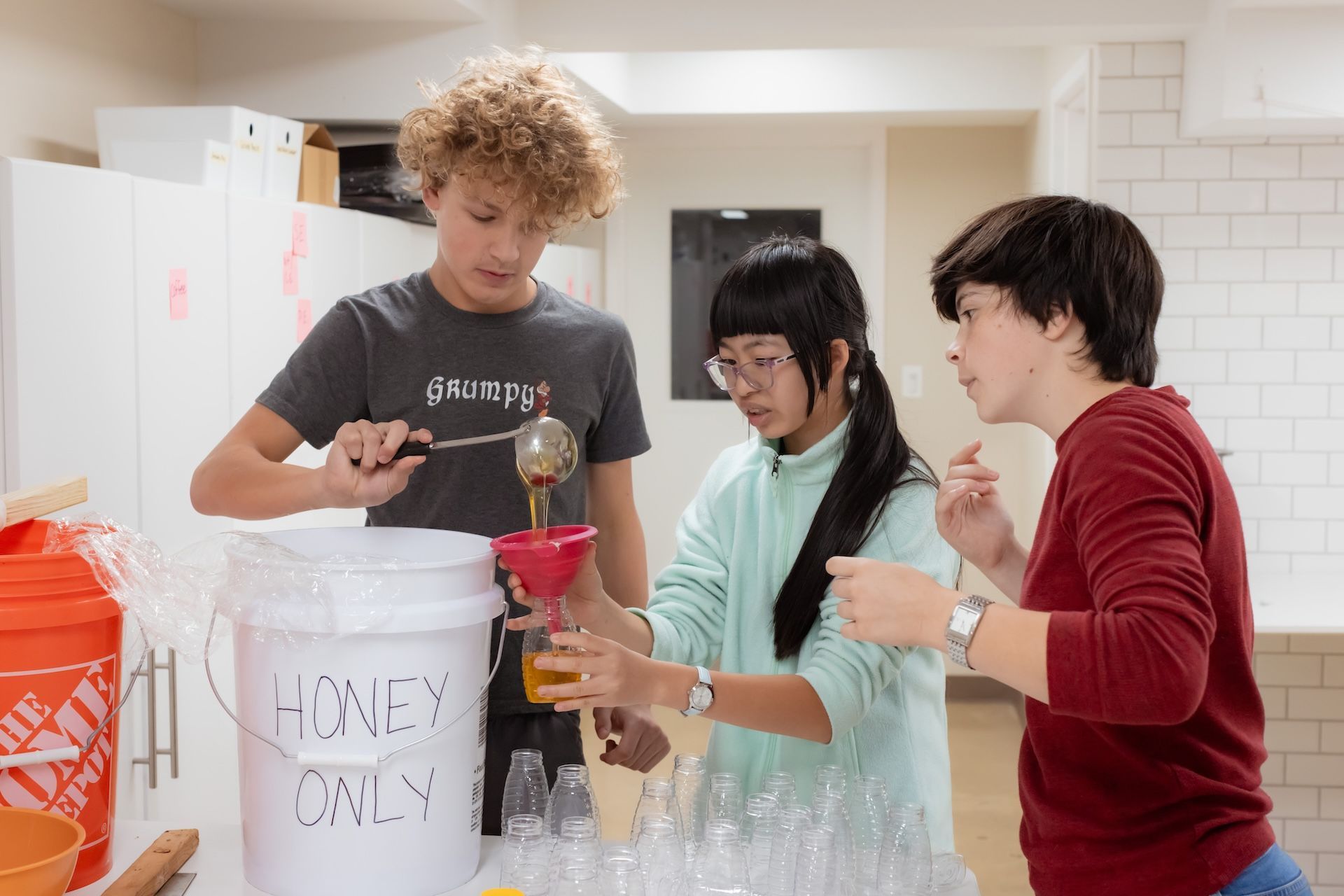
In Montessori adolescent programs, students decide upon and manage small-scale businesses. These are not simulations. They are real ventures serving real community needs.


Through these experiences, young people:


  • Learn how their efforts impact others
  • Feel the pride of being needed and useful
  • Grapple with the complexities of work, money, and time
  • Develop confidence and a growing sense of purpose


This work forms character and builds a sense of dignity that cannot be taught through lectures or assignments.


Interdependence and the Reality of Society


While independence is essential, it is only part of the picture. The deeper goal of adolescence is to understand and embrace interdependence. We are all connected. No one can do everything alone. Contribution to others is both a privilege and a responsibility.


Through real work, adolescents see this web of connection. They experience firsthand that:


  • Society functions through collaboration
  • Each person has a role to play
  • The success of one is often tied to the success of many


Whether they are preparing meals for the community or adjusting a business plan to meet increased demand, adolescents begin to understand what it means to live with others, not just near them. They see how their actions matter.


Valorization Through Work


At the heart of all of this is something Dr. Montessori called “valorization of the personality.” This is the feeling of being capable, of being recognized as a person of value, of seeing oneself reflected in the eyes of others as someone who contributes meaningfully.


Valorization is the antidote to the uncertainty and fragility that so often characterize adolescence. This is how young people become strong, secure, and self-aware. Through valorization, they begin to understand who they are and how they can serve. Ultimately, this is how adolescents prepare for adult life.


To Become Oneself


The adolescent years are often misunderstood as turbulent or rebellious. But from a Montessori perspective, adolescence is a time of becoming, a time when young people, equipped with growing independence, turn toward society and say, "Let me try. Let me contribute. Let me become who I am meant to be."


In guiding them toward economic independence, meaningful work, and social contribution, we are not only preparing adolescents for the future. We are affirming their worth right now, as capable, valuable, contributing members of the human community.


Schedule a tour here in Bozeman, MT, to see how we support young people in this process of becoming! 

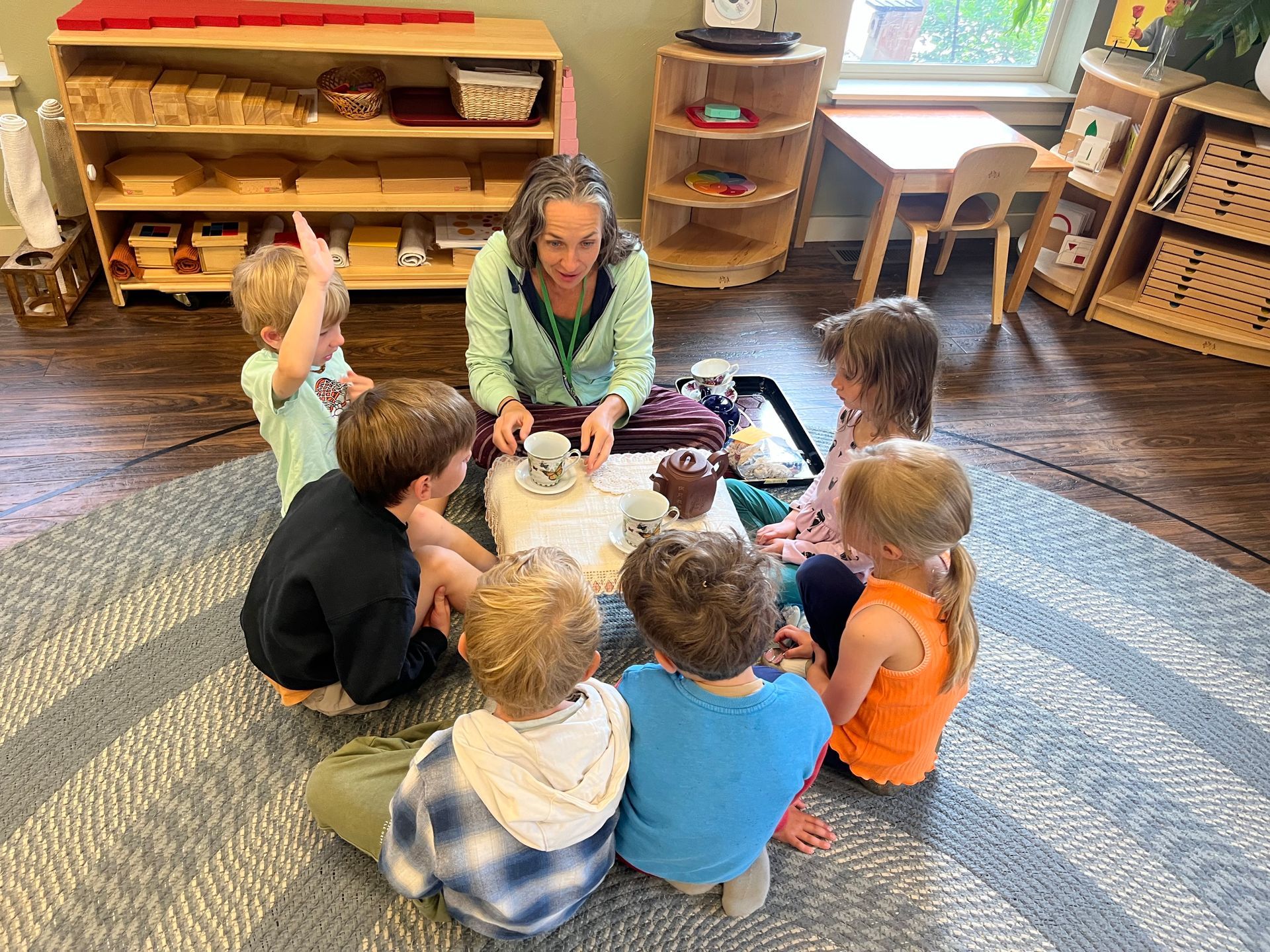
montessori children with guide in tea lesson
June 26, 2026
We’re opening our doors for a special campus tour and we'd love for you to join us!
Three young children sitting on a couch, smiling in a bright indoor room.
June 15, 2026
Connect the Montessori classroom to nature. Discover how exploring Montana’s rivers helps young children develop spatial awareness and environmental respect.
Two children kneel on a classroom rug behind a colorful block maze on the floor.
June 1, 2026
In the Montessori tradition, we talk a lot about "following the child." Sometimes people mistake this for letting a child do whatever they want. But as those of us who have been in the trenches know, following the child actually means observing them through developmental periods so thoughtfully that we understand what they need before they even have the words for it. When it comes to mental health, this observation is our greatest tool, as it helps us prepare. Mental health in childhood includes resilience, the security of belonging, and the development of an "inner voice" that tells a child they are capable, eventually serving as their source of internal guidance. Supporting this development requires us adults to shift from being managers of their behavior to loving guardians of their emotional environment. The Foundation: Safety and Routine For children in the first plane of development (birth to age 6), the groundwork for mental health is laid through warm, secure relationships. In Montessori terms, this is the "prepared environment” of connection. We often say that children need consistency like they need air. We provide stability through routine—not a rigid schedule, but a predictable rhythm. When a child knows what comes next, their nervous system relaxes. Simple acts like involving them in everyday moments—letting them slice a banana or fold washcloths—give them a sense of agency. A child who contributes to the world around them is a child who feels capable and valued. This sense of "I can do it" is important, and sometimes we just have to get out of the way. The Elementary Years: The Why and the Who As children move into the second plane of development (ages 6–12), their mental health needs shift toward social belonging and moral understanding. This is the age of "Why?" and "That’s not fair!" At this stage, adults can check in on their feelings through everyday events. Did they get into a fight with their friend? Don’t rush to fix the sadness. Instead, sit with them in it. We can support their mental health by giving them the tools to solve their own social problems. Ask, "What do you think would help you feel better?" rather than handing them the solution. This builds the self-efficacy that helps buffer against anxiety and depression later in life. Learning the Hard Way Mental health isn't about avoiding the scary or hard things that come with growing up; it's about making sure your child never has to face them alone. It’s about cuddles, and hugs, and playing with your kids. It’s about recognizing that a tantrum isn't an attack on your parenting—it’s a child whose inner "prepared environment" has temporarily collapsed, and they need you to help them rebuild it. The Parent’s Work (The Inner Preparation) In Montessori, the "prepared adult" must do their own inner work to best be able to guide a child. Parenting can feel messy, and it rarely looks like the peaceful, perfectly-balanced life we might have imagined. Here is how to keep your own foundation solid: Honoring the "Gap": Make peace with the fact that your reality may not match your expectations. There will be days when you are not the “calm, cool and collected“ model you want to be. Forgive yourself. Your children don’t need a perfect parent; they need a regulated one who can apologize when they mess up and move forward. Mindful Co-Parenting: Whether you live in the same house or two, communication between co-parents must be clear and boundary-honoring. Children are emotional barometers; they feel the pressure of unspoken conflict. Aim for "functional transparency"—share the necessary information about the child’s needs without using the child as a messenger. Self-Care is Not a Luxury: You cannot pour from an empty vessel. In the Montessori classroom, a tired, burnt-out adult is not the example we want to set, nor is it an effective one. Taking ten minutes for a quiet tea or a solo walk isn't "ignoring" your kids; it’s calibrating your instrument so you can be the calm center they need. Boundaries as Love: Setting a boundary for yourself ("I need 5 minutes of quiet before I can help with that") teaches your child that you are a human with needs. This honors your humanity and models for them how to protect their own mental health in the future.
Children sit in a circle around a teacher at a table, sharing a small activity in a classroom.
May 18, 2026
Overbooking your child's summer? Learn why unstructured downtime and embracing a little boredom are vital for nurturing your child's creativity.
Montessori child working in the classroom
May 18, 2026
We’re opening our doors for a special campus tour and we'd love for you to join us! 
May 4, 2026
Discover how Montessori education champions character development, physical autonomy, and personal best over the cultural pressure of competition.
A child with hair in small buns sits at a wooden table, painting on a sheet of paper with a small brush.
April 27, 2026
Discover how peer learning, meaningful context, adult interaction, and order align Montessori with the science of how children learn best.
Two children hang pieces of fabric on a wooden drying rack inside a classroom.
April 20, 2026
Does Montessori work? Explore the research behind movement, choice, interest, and intrinsic motivation in Montessori: The Science Behind the Genius.
April 16, 2026
Saturday, April 25th, 9:00 am - Noon Bozeman Montessori South Campus: 233 Enterprise Blvd, Bozeman, MT 59718 Bozeman Montessori North Campus: 3774 Equestrian Lane, Bozeman, MT 59718
An adult in a green trench coat holds hands with a child wearing a pink jacket, walking together in an outdoor area.
April 13, 2026
When we lose our cool, repair matters most. Explore accountability, curiosity, and connection to break reactive cycles and parent with intention.
Show More