Cosmic Education

April 28, 2025

Elementary-aged children have an innate desire to learn about the universe, the world, places, people, and how they interact. They yearn to understand why and how. They are eager to understand not only the culture in which they live but also make sense of the magnitude of cultures (human and non-human) that make up the entire world and, indeed, the entire cosmos.


Dr. Maria Montessori developed Cosmic Education as a guiding framework for children in the second plane of development (ages 6 to 12). Comic Education is designed to nurture their reasoning minds and imagination while fostering a sense of interconnectedness and wonder. 


The Philosophy of Cosmic Education


Dr. Montessori described Cosmic Education as an approach that offers children a vision of the universe and its order and a way to understand how all things are interrelated.


“If the idea of the universe be presented to the child in the right way, it will do more for him than just arouse his interest, for it will create in him admiration and wonder... his intelligence becomes whole and complete because of the vision of the whole that has been presented to him.”


– Dr. Maria Montessori

To Educate the Human Potential


Rather than teaching isolated subjects, Cosmic Education presents an integrated curriculum where history, science, geography, language, and math are interwoven into a grand narrative. This holistic approach helps children see themselves as part of both a larger human story and the natural world.


The Scope of Cosmic Education


Unlike traditional curricula focused on skills, facts, and assessments, Cosmic Education prioritizes deep exploration. As Montessori educators, we recognize that we are guides who plant seeds of interest, knowing that these seeds may germinate later in life. We encourage children to pursue knowledge freely, follow their curiosity, and make connections across disciplines.


At its core, Cosmic Education is centered around key themes:

Natural Laws: The universe follows natural laws, from gravity to the water cycle, which children observe and study. Human societies also create laws to maintain order and cooperation.


Work & Contributions: Everything in nature and human civilization has a role to play. From the work of bees pollinating plants to the contributions of scientists and artists, children see how each element of the universe is purposeful.


Interdependencies & Relationships: All systems in the universe, from ecosystems to human economies, are interconnected. Montessori education highlights these relationships to foster understanding and responsibility.


Love, Appreciation, & Gratitude: Cosmic Education nurtures a sense of reverence for the universe, whether through scientific discovery or historical narratives.


The Great Stories: A Foundation for Learning


Cosmic Education is introduced through the Great Stories, a series of imaginative, inspiring tales we share with wonder and reference. These stories not only provide a tantalizing glimpse into the marvels of the universe, they also provide a framework for deeper study. In order to bring significant concepts to life, Montessori elementary guides appeal to students’ imagination through allegory, metaphor, beautiful language, charts, and dramatic demonstrations. 


The Great Stories include:


The Creation of the Universe (“God with No Hands”) – An awe-inspiring story about the origins of the universe, the formation of galaxies, and the forces that shape our world.


The Coming of Life – A journey through the evolutionary changes of life on Earth that culminates in an introduction to the fascinating Timeline of Life. 


The Story of Humans – Explores the unique intellectual and creative capacities of human beings, emphasizing imagination and innovation.


The Story of Communication in Signs/The Story of Our Alphabet Story – Traces the development of written language, from ancient symbols to modern alphabets.


The Story of Our Numerals – Highlights how mathematics is another kind of human language and introduces the power of math to bring order and exactness, including how math has allowed humans to meet their needs in different ways.


These stories captivate children’s imaginations, prompting further exploration of subjects like physics, chemistry, history, and biology. They provide a unifying theme that integrates all areas of study, reinforcing the idea that learning is not fragmented but part of a cohesive whole.


Outcomes of Cosmic Education


Dr. Montessori’s vision of education extends beyond academics; it is about shaping compassionate, knowledgeable, and socially responsible individuals. She believed that understanding our place in the cosmos fosters humility, gratitude, and a commitment to improving the world.


Through Cosmic Education, children develop:


  • A sense of purpose, recognizing that their work and actions contribute to the greater whole.
  • An organized and analytical mind, capable of seeing patterns and relationships in complex information.
  • A deep appreciation for humanity and nature, encouraging them to become responsible stewards of the Earth.
  • A lifelong love of learning, driven by curiosity rather than external rewards.


Nurturing wonder, critical thinking, and interconnected understanding lays the foundation for a lifetime of meaningful learning and engagement with the world. Ultimately, Montessori’s Cosmic Education is more than a curriculum—it is a philosophy that empowers children to view themselves as active participants in the ongoing story of the universe. The best way to learn about Cosmic Education is to come see it in action! Schedule a tour today!

Teacher helping children at a table with a board game in a classroom
July 30, 2026
Come see the Montessori environment in action! Now enrolling for the 2026-2027 school year.
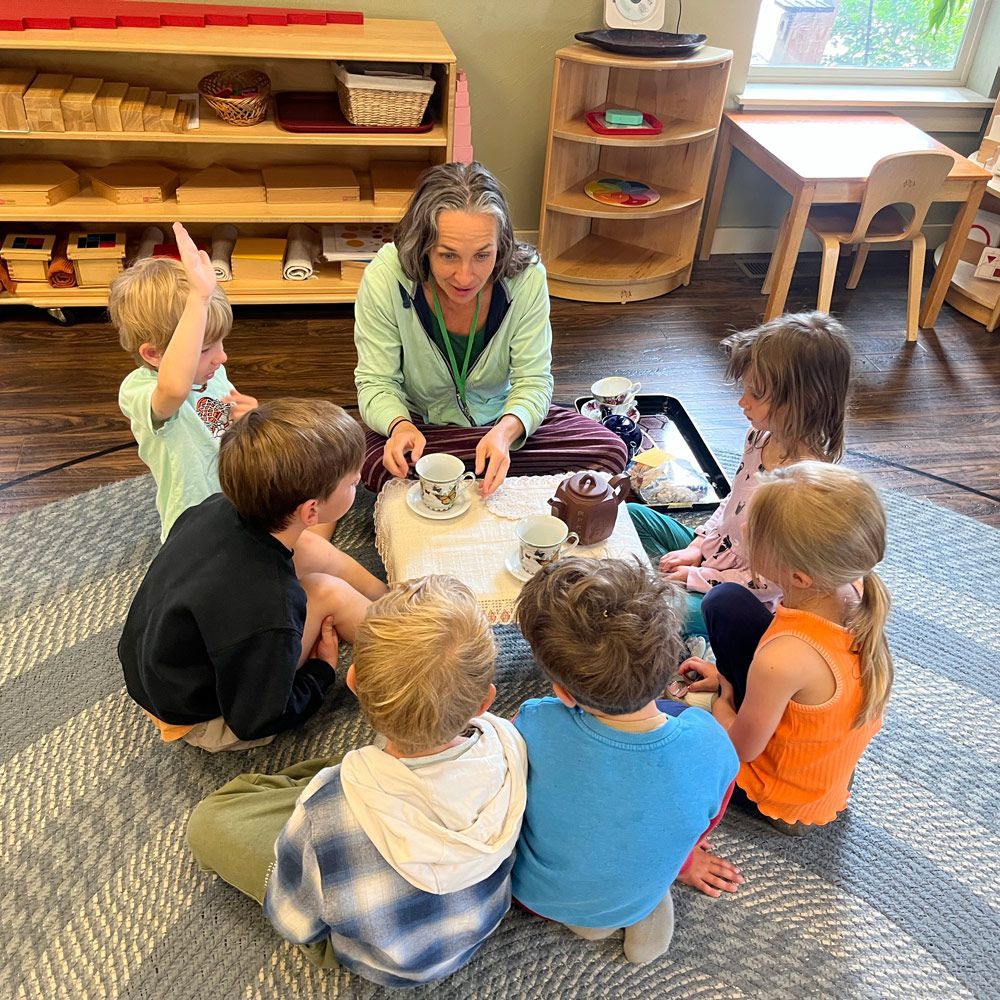
montessori children with guide in tea lesson
June 26, 2026
We’re opening our doors for a special campus tour and we'd love for you to join us!
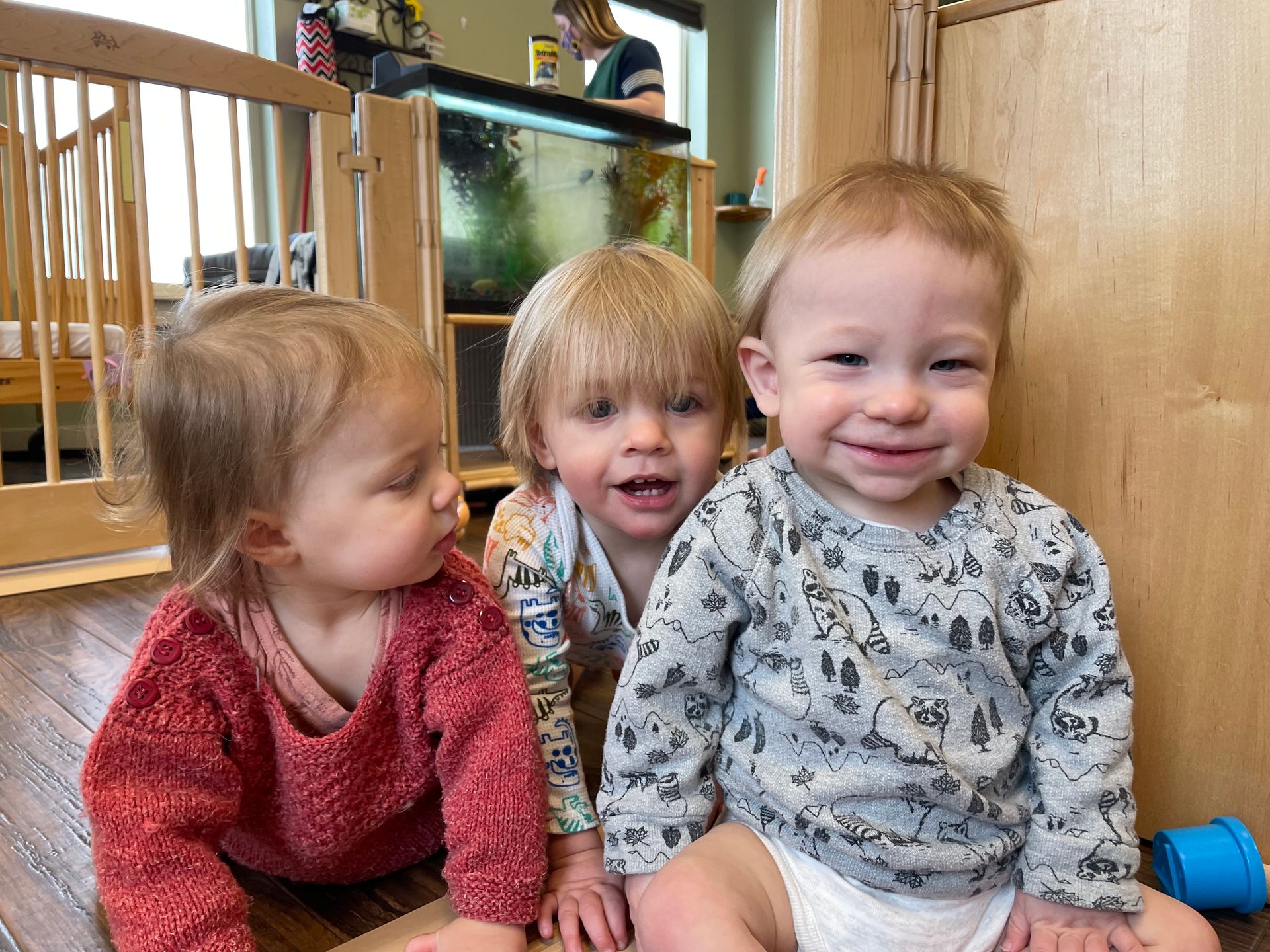
Three young children sitting on a couch, smiling in a bright indoor room.
June 15, 2026
Connect the Montessori classroom to nature. Discover how exploring Montana’s rivers helps young children develop spatial awareness and environmental respect.
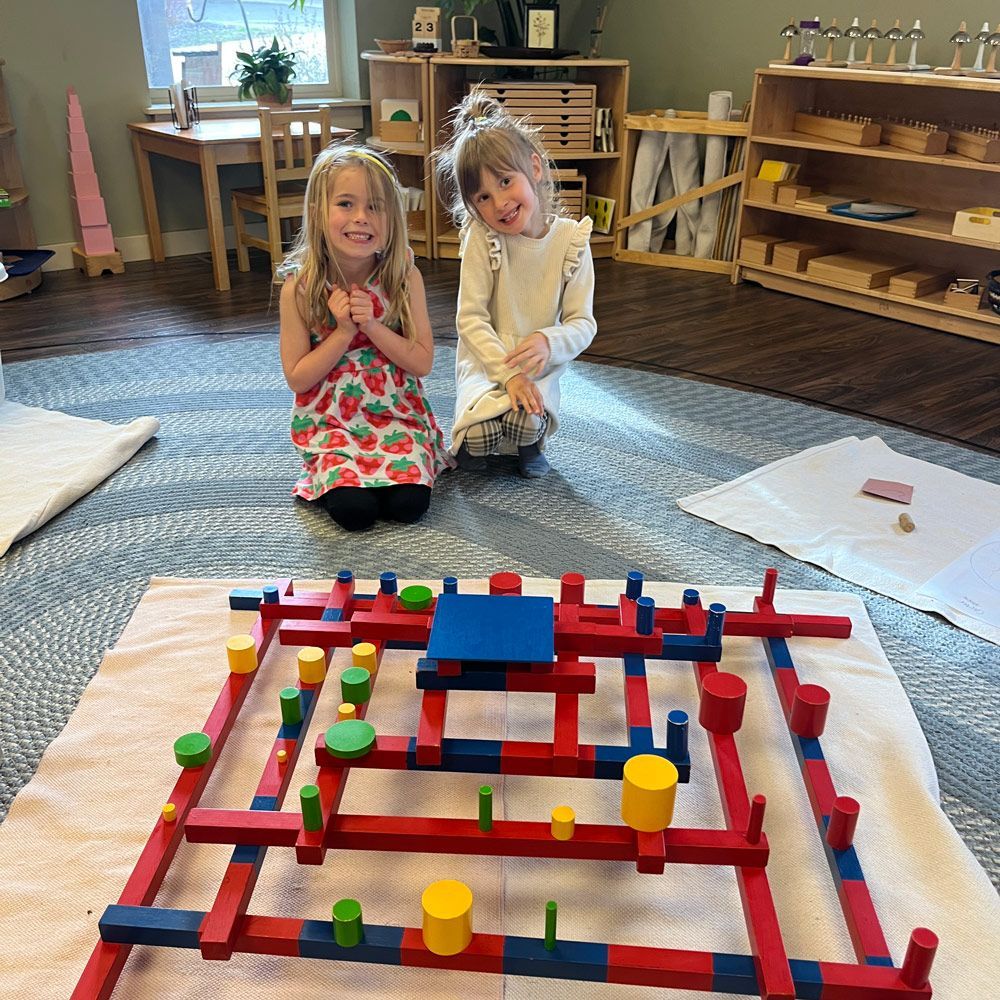
Two children kneel on a classroom rug behind a colorful block maze on the floor.
June 1, 2026
In the Montessori tradition, we talk a lot about "following the child." Sometimes people mistake this for letting a child do whatever they want. But as those of us who have been in the trenches know, following the child actually means observing them through developmental periods so thoughtfully that we understand what they need before they even have the words for it. When it comes to mental health, this observation is our greatest tool, as it helps us prepare. Mental health in childhood includes resilience, the security of belonging, and the development of an "inner voice" that tells a child they are capable, eventually serving as their source of internal guidance. Supporting this development requires us adults to shift from being managers of their behavior to loving guardians of their emotional environment. The Foundation: Safety and Routine For children in the first plane of development (birth to age 6), the groundwork for mental health is laid through warm, secure relationships. In Montessori terms, this is the "prepared environment” of connection. We often say that children need consistency like they need air. We provide stability through routine—not a rigid schedule, but a predictable rhythm. When a child knows what comes next, their nervous system relaxes. Simple acts like involving them in everyday moments—letting them slice a banana or fold washcloths—give them a sense of agency. A child who contributes to the world around them is a child who feels capable and valued. This sense of "I can do it" is important, and sometimes we just have to get out of the way. The Elementary Years: The Why and the Who As children move into the second plane of development (ages 6–12), their mental health needs shift toward social belonging and moral understanding. This is the age of "Why?" and "That’s not fair!" At this stage, adults can check in on their feelings through everyday events. Did they get into a fight with their friend? Don’t rush to fix the sadness. Instead, sit with them in it. We can support their mental health by giving them the tools to solve their own social problems. Ask, "What do you think would help you feel better?" rather than handing them the solution. This builds the self-efficacy that helps buffer against anxiety and depression later in life. Learning the Hard Way Mental health isn't about avoiding the scary or hard things that come with growing up; it's about making sure your child never has to face them alone. It’s about cuddles, and hugs, and playing with your kids. It’s about recognizing that a tantrum isn't an attack on your parenting—it’s a child whose inner "prepared environment" has temporarily collapsed, and they need you to help them rebuild it. The Parent’s Work (The Inner Preparation) In Montessori, the "prepared adult" must do their own inner work to best be able to guide a child. Parenting can feel messy, and it rarely looks like the peaceful, perfectly-balanced life we might have imagined. Here is how to keep your own foundation solid: Honoring the "Gap": Make peace with the fact that your reality may not match your expectations. There will be days when you are not the “calm, cool and collected“ model you want to be. Forgive yourself. Your children don’t need a perfect parent; they need a regulated one who can apologize when they mess up and move forward. Mindful Co-Parenting: Whether you live in the same house or two, communication between co-parents must be clear and boundary-honoring. Children are emotional barometers; they feel the pressure of unspoken conflict. Aim for "functional transparency"—share the necessary information about the child’s needs without using the child as a messenger. Self-Care is Not a Luxury: You cannot pour from an empty vessel. In the Montessori classroom, a tired, burnt-out adult is not the example we want to set, nor is it an effective one. Taking ten minutes for a quiet tea or a solo walk isn't "ignoring" your kids; it’s calibrating your instrument so you can be the calm center they need. Boundaries as Love: Setting a boundary for yourself ("I need 5 minutes of quiet before I can help with that") teaches your child that you are a human with needs. This honors your humanity and models for them how to protect their own mental health in the future.
Children sit in a circle around a teacher at a table, sharing a small activity in a classroom.
May 18, 2026
Overbooking your child's summer? Learn why unstructured downtime and embracing a little boredom are vital for nurturing your child's creativity.
Montessori child working in the classroom
May 18, 2026
We’re opening our doors for a special campus tour and we'd love for you to join us! 
May 4, 2026
Discover how Montessori education champions character development, physical autonomy, and personal best over the cultural pressure of competition.
A child with hair in small buns sits at a wooden table, painting on a sheet of paper with a small brush.
April 27, 2026
Discover how peer learning, meaningful context, adult interaction, and order align Montessori with the science of how children learn best.
Two children hang pieces of fabric on a wooden drying rack inside a classroom.
April 20, 2026
Does Montessori work? Explore the research behind movement, choice, interest, and intrinsic motivation in Montessori: The Science Behind the Genius.
April 16, 2026
Saturday, April 25th, 9:00 am - Noon Bozeman Montessori South Campus: 233 Enterprise Blvd, Bozeman, MT 59718 Bozeman Montessori North Campus: 3774 Equestrian Lane, Bozeman, MT 59718
Show More