An Explosion in Language Development
Almost 120 years ago, when Dr. Maria Montessori created the first Children’s Houses in the slums of Rome, she saw a curious phenomenon. Young children, who not that long before had been considered street urchins, developed a sense of pride in their work and soon were eager to read and write. In fact, Dr. Montessori tells a story about how the children and their parents begged her to teach them writing and reading, despite the fact that, at the time society didn’t think that children under six were capable of this type of learning.
Then Dr. Montessori did what she did so well: she observed the children, she identified what skills they needed, and she provided opportunities for the children to develop. The result? Dr. Montessori saw what she described as an “explosion” into writing and reading.
In Montessori, we support children’s progression (and “explosion”!) in three aspects of language development: spoken language, written expression, and interpretive reading.
Spoken Language
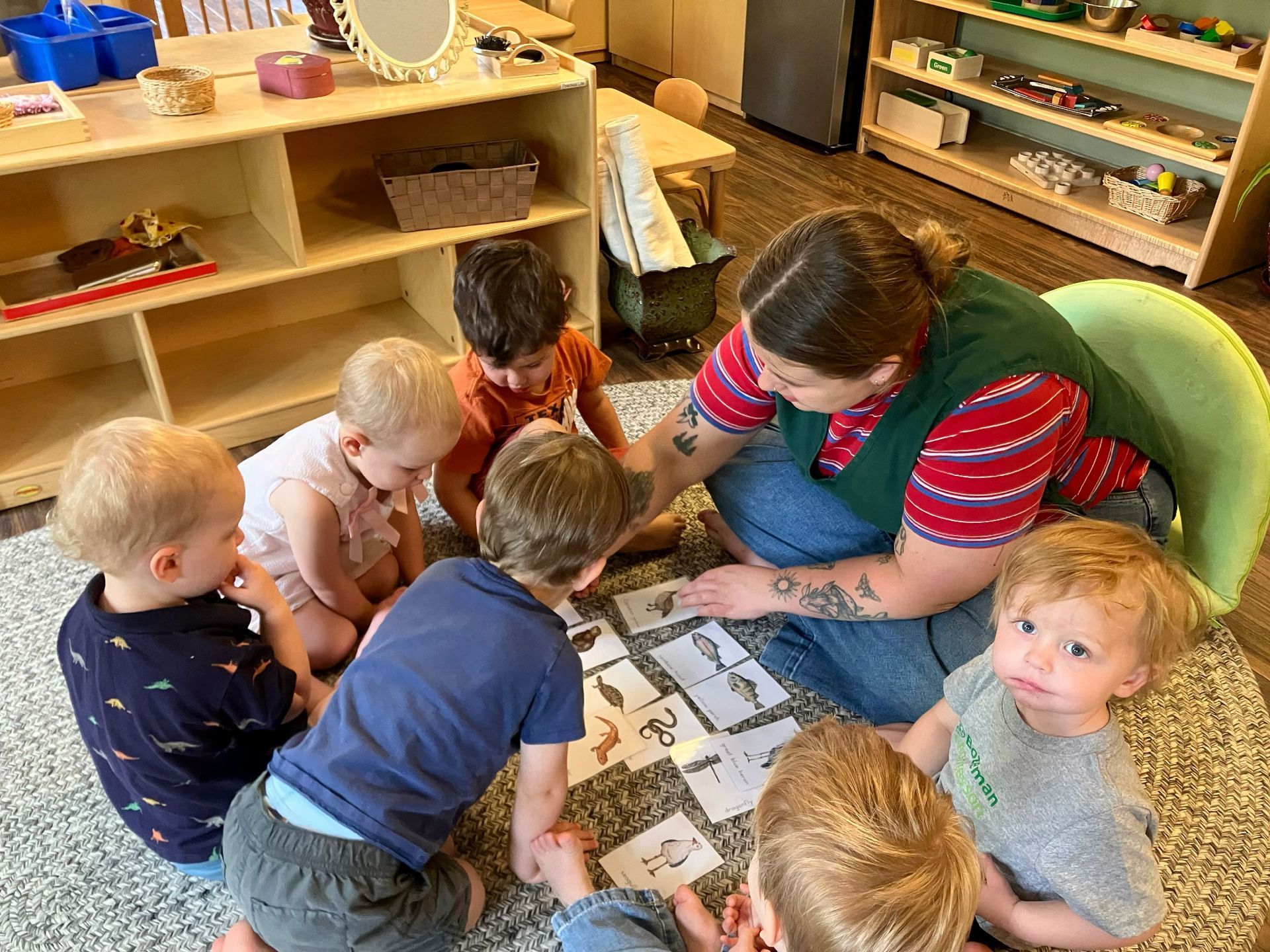
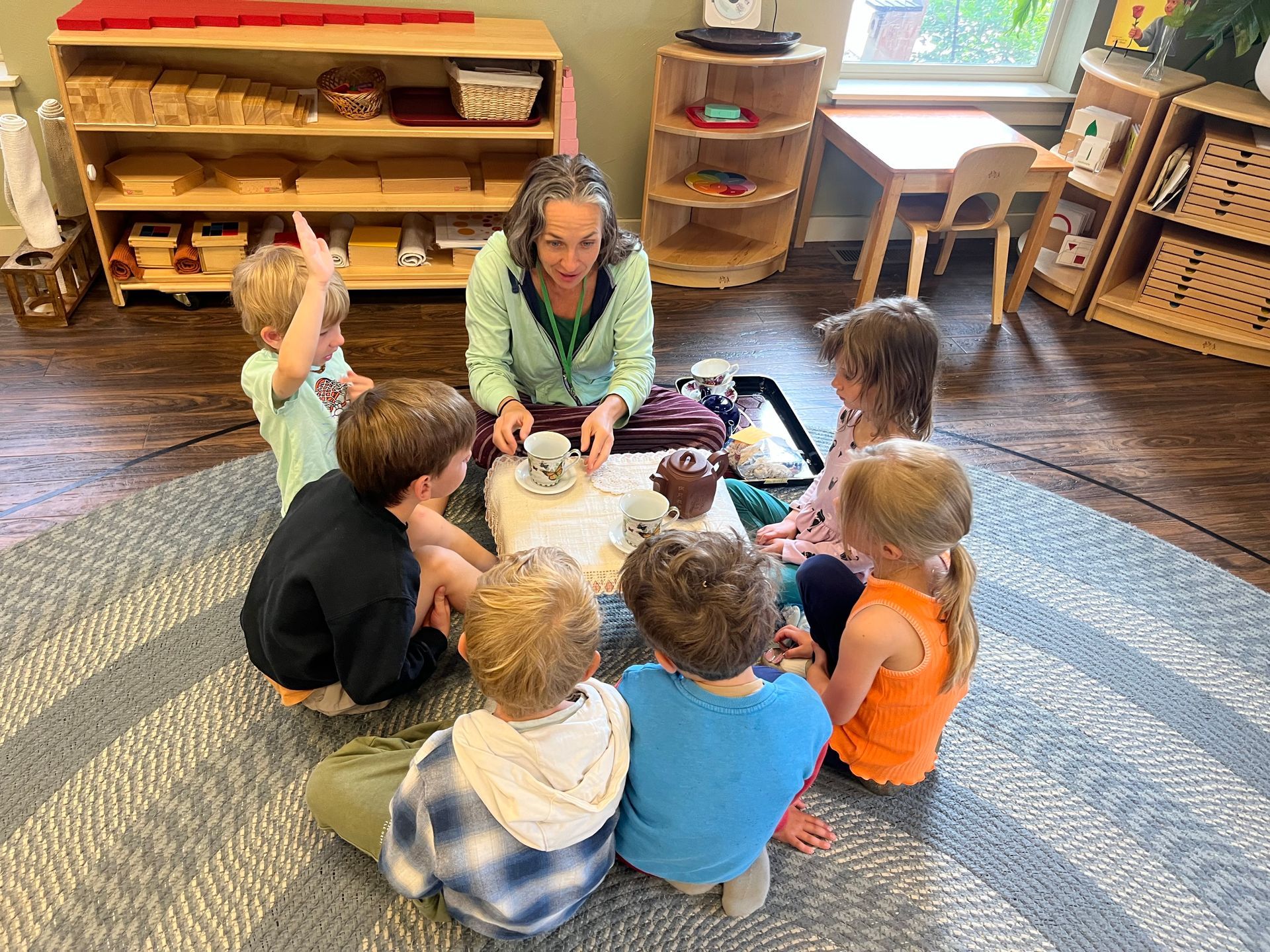
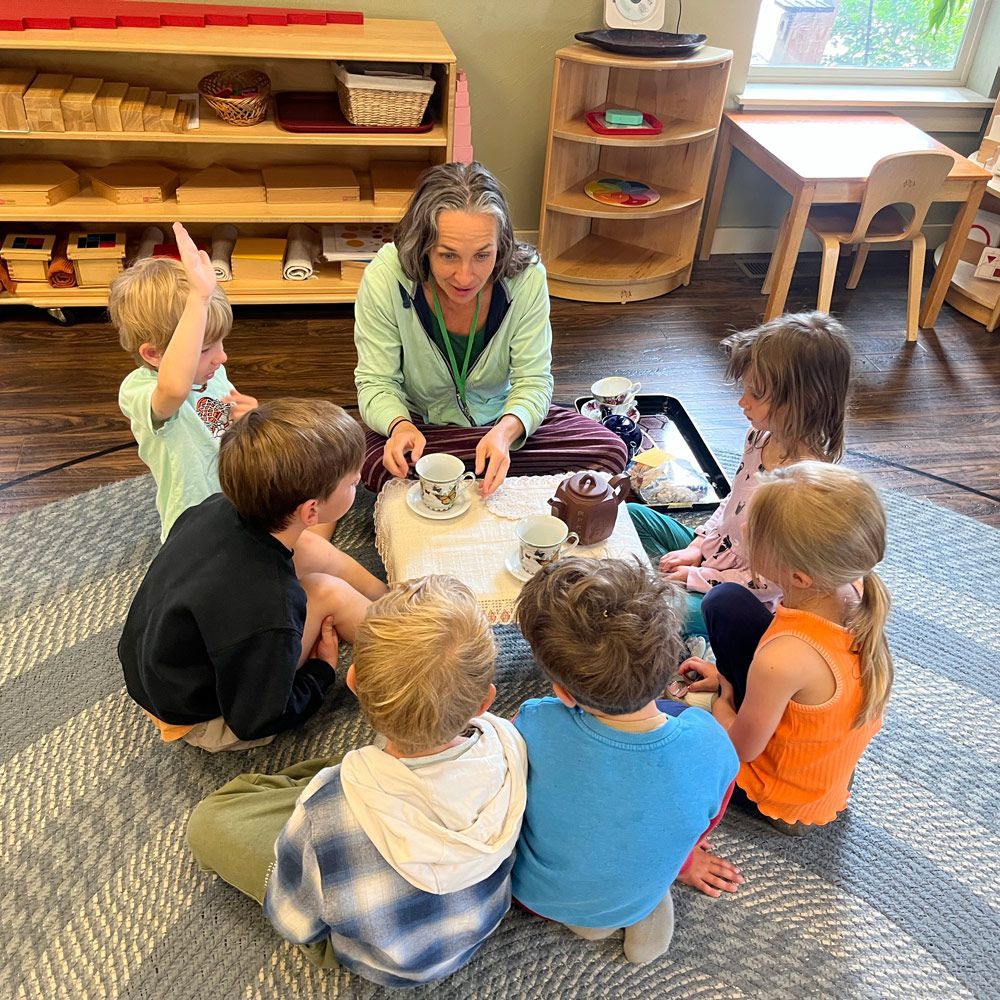
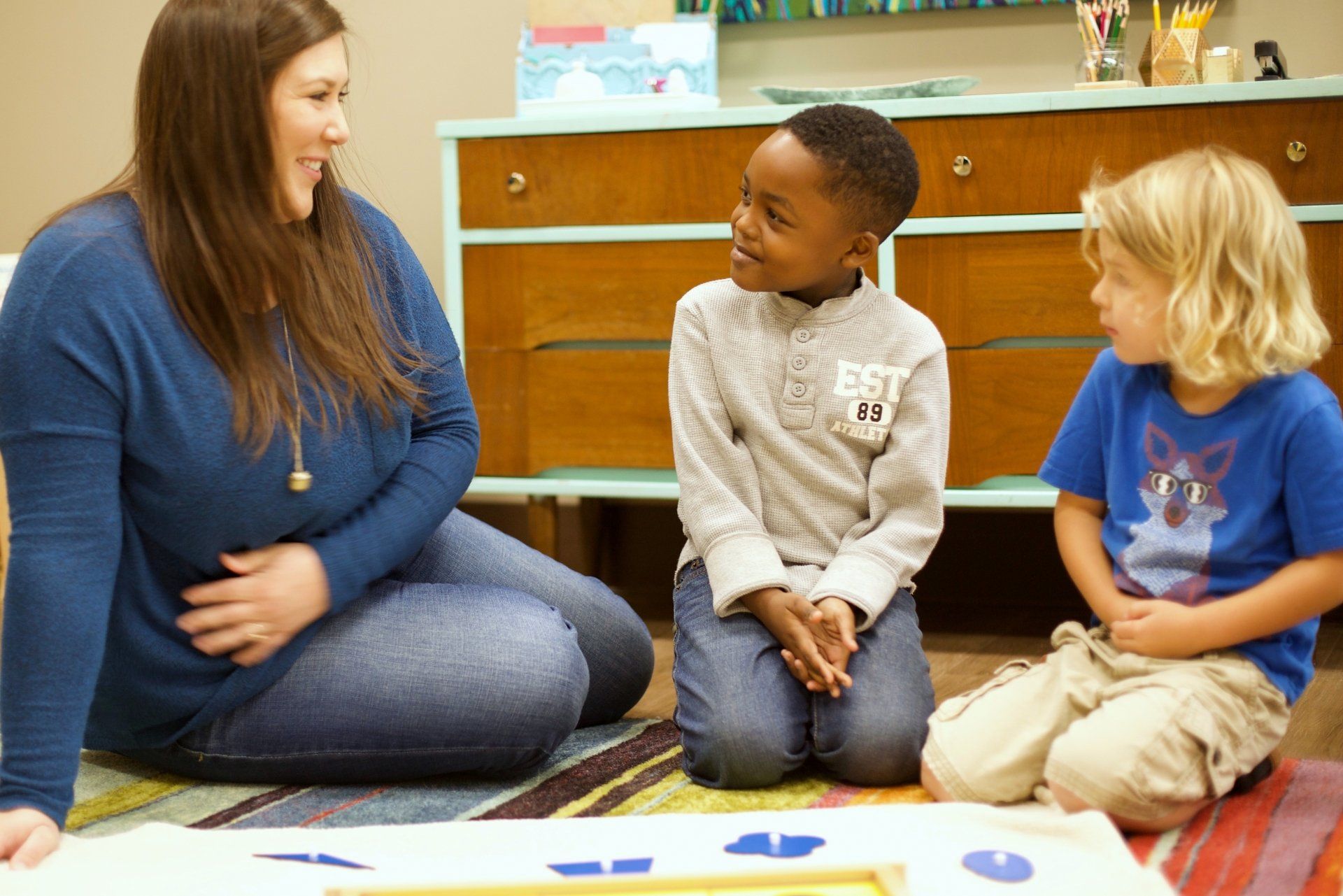
Because spoken language is the foundation for all work in the language area, we offer rich, full, and beautiful language for young children through a variety of activities to cultivate conversation skills. Our enrichment of vocabulary exercises focus directly on expanding children’s receptive vocabularies and cultivating children’s experience and intelligence. As we engage children in language games, we also help increase their listening skills as well as their comprehension. As part of spoken language development, we also take the time to listen to children’s own spontaneous efforts of expression, so that they gain confidence in speaking and feel that their thoughts have meaning.
Written Expression
The act of writing consists of two separate elements: composing and recording. Composing is the mental work–thinking about what to say. Recording is the physical aspect of writing. In the Children’s House, we prepare these two elements separately by offering exercises to prepare the hand for recording and exercises to prepare the mind for composing. Writing is having a known thought that goes from sound to symbol, a process that is much easier than the process of reading.
Because the development of the hand takes longer than the development of the mind, we use a material called the movable alphabet as a way for children to compose words before their hands are ready to write. The movable alphabet is a box containing the letters of the alphabet, essentially the building blocks of all the sounds in our language.
Interpretive Reading
In Montessori environments, unlike many traditional settings, reading is introduced after writing because the process of reading is cognitively more difficult. Writing is essentially an expression of thought. When we write something, we know what we are writing. When we read something, we don’t know what the author was communicating so we have to take the symbols, match sounds to them, blend them together, and then attach meaning to them. This is much harder to do.
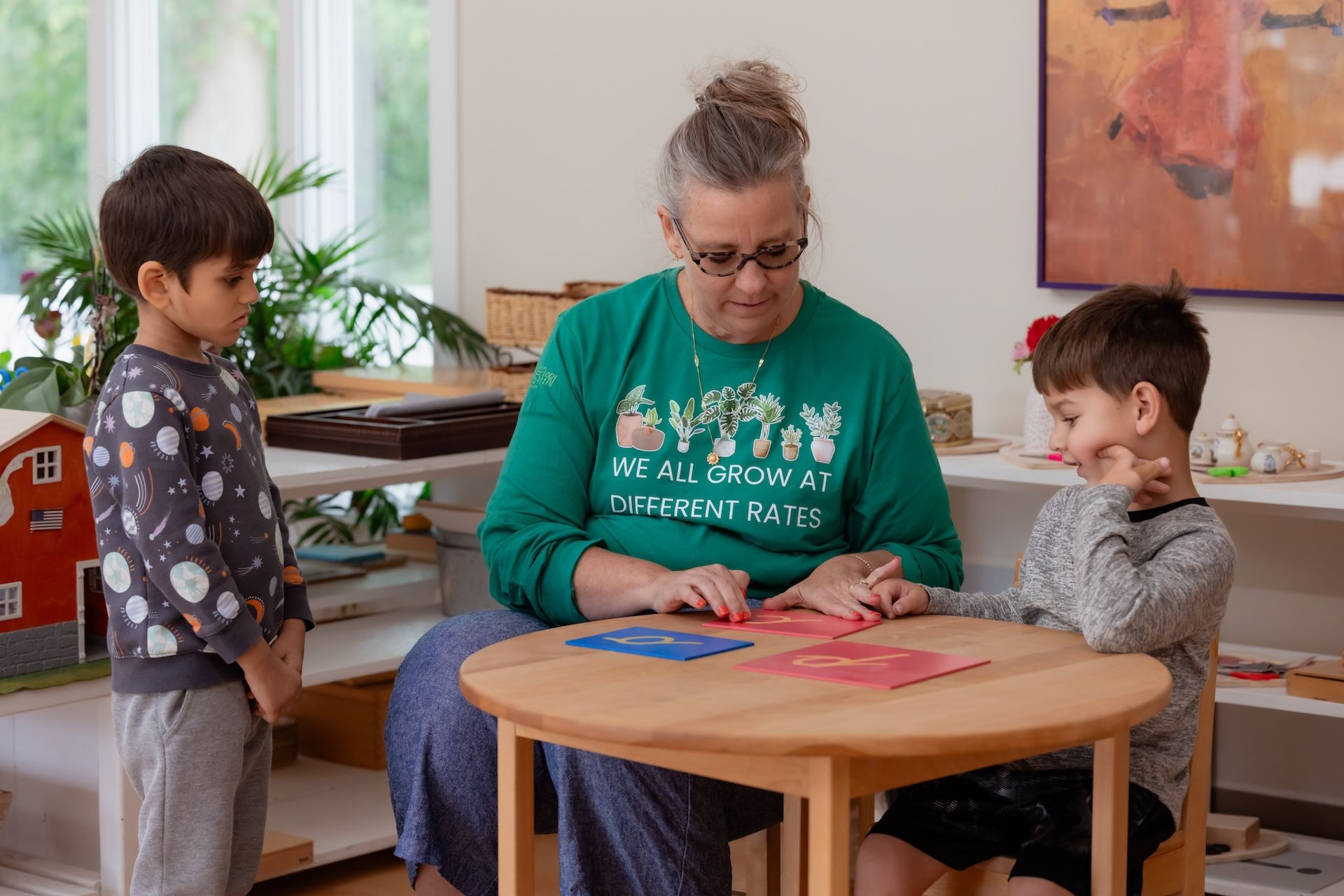
While the hand needs to be prepared for writing, the eye must be prepared for reading. This includes being able to follow a left to right, top to bottom progression across the page. In addition, the eye must recognize that the symbols in our language are lines creating a shape. So we have lots of activities with the geometry cabinet, as well as other sensorial materials, to prepare children for this visual discrimination. We also use the sandpaper letters to introduce the phonemes of language through three senses: tactile, visual, and auditory. Through games with the sandpaper letters, children get to practice the trace of the letter through gross motor movement of the whole arm and hand, see the shape, and associate the letter sound with its shape and their own movement.
Once children progress from reading words (mostly nouns), to reading phrases and finally sentences and paragraphs, we offer activities to highlight how different words have different functions. These exercises also highlight the syntax or order of words (e.g. adjectives tend to come before the noun they are describing). Another set of exercises, called reading analysis, highlights the role or the order of parts of a sentence. In the process of understanding the components of our language, children are better able to interpret what the author is writing.
The Pattern of Human Language Development
The progression that young children go through – spoken language to written expression to interpretive reading – follows the pattern of early human language development. Early humans began with spoken language, then advanced into forms of writing (think of the first cave paintings and picture writing), and later moved into reading as a way to interpret the thoughts of others. How amazing that our young children do the same in a matter of years from birth to age six!
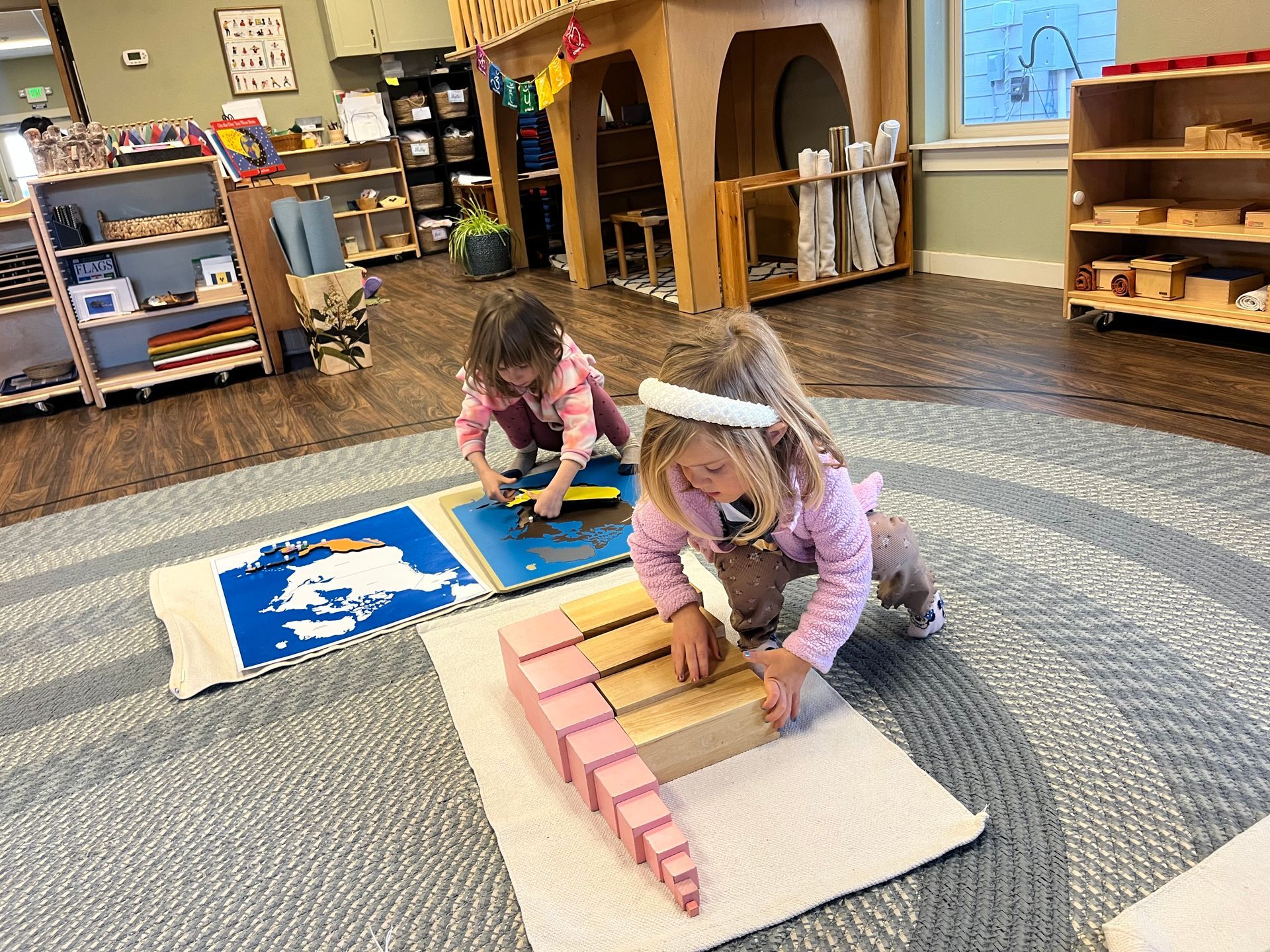
One of the joys of the Montessori learning environment is how language learning is woven into all aspects of the children’s experience. When we present dusting, for example, we model a left to right, top to bottom pattern, which prepares the eye for tracking words on a page. When children use sensorial touch tablets and the rough and smooth boards, they develop lightness of touch and a relaxed hand necessary for writing. Every time children grasp a knob of the knobbed cylinders, they prepare their hand for holding a writing instrument.
Through the sound game, children become aware of the fact that words are made of sounds and they begin to identify all of the sounds in a word and place them in order. Through the sandpaper letters and sandpaper phonograms, children associate the sounds of our language with their symbols. This is exciting work for the children because not only can they see the isolated symbols, but they can touch them, too! Through the moveable alphabet, children are able to write their thoughts even before their hand is ready to control a pencil.
The genius of the Montessori approach is that it breaks down individual skills and abilities so that children can practice them in isolation. So by the time children have mastered these individual skills, they seem to spontaneously know how to write or know how to read.
Once this explosion into writing and reading has occurred, then children are excited to refine their writing and access worlds of knowledge through reading. A new journey of discovery and learning begins.
We invite you to visit the school to learn more about the “explosion” in language development and the joyous journey that unfolds!